
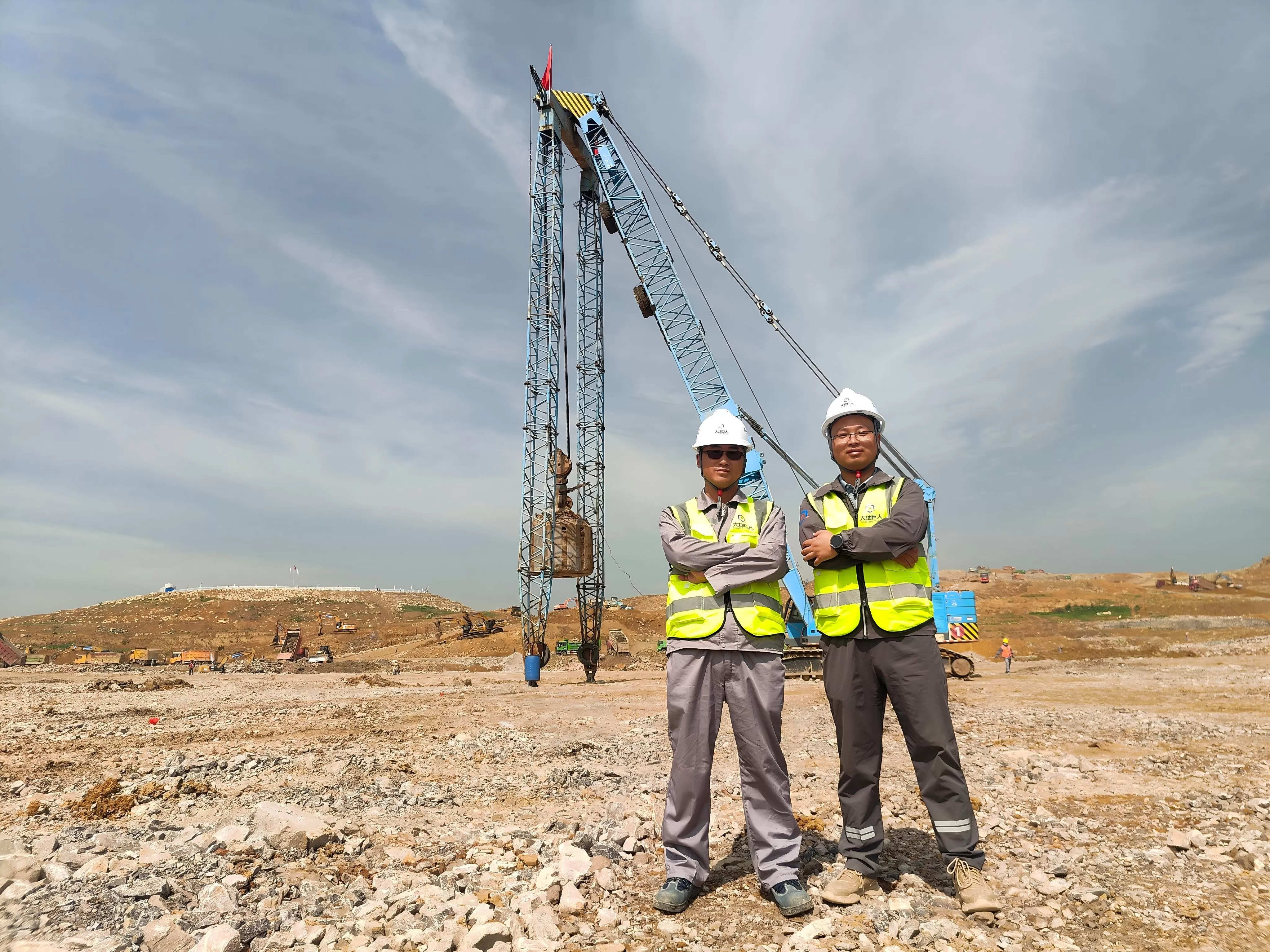
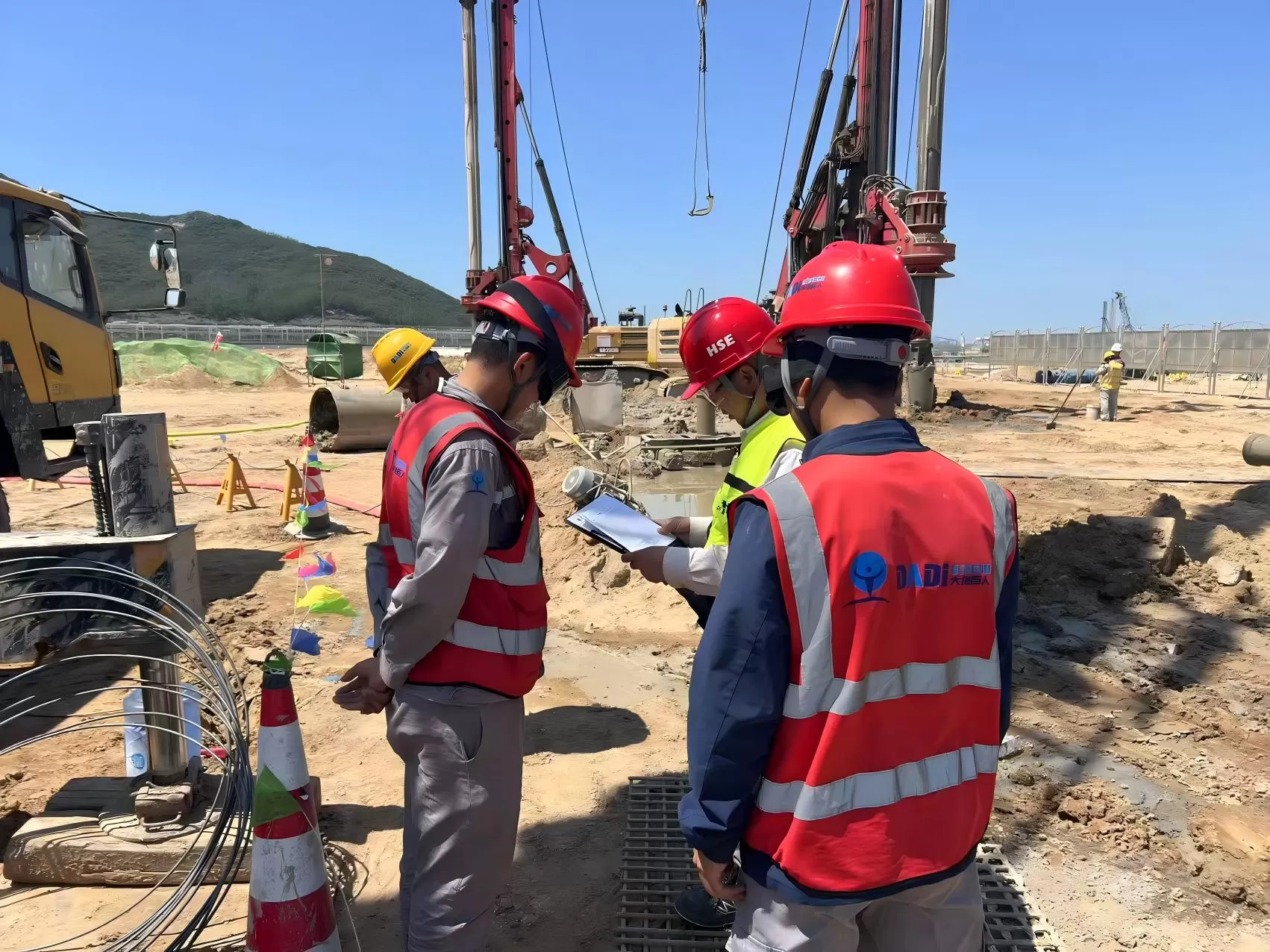





The project involved site formation and ground improvement works for TCL CSOT’s t9 Generation 8.6 oxide semiconductor display panel production line. It is located in Huangpu District, Guangzhou, Guangdong Province. The site is designated for industrial use, with a total land area of approximately 630,000 square metres and a total building area of approximately 1.21 million square metres.
The original landform of the site was an abandoned quarry pit. Prior to ground improvement, earthwork excavation and site levelling works were being carried out. The proposed facilities include the ARRAY building, CELL/CF building, BEOL building, LCM building, wastewater treatment station, central utility plant, bulk gas station, 220kV substation and other production and supporting facilities.
As a high-generation display panel production line project, the site would support large industrial buildings, precision manufacturing equipment and various utility facilities, placing high requirements on foundation bearing performance, deformation control, ground uniformity and long-term stability.
The original ground level of the site was generally higher than the design elevation. Before dynamic compaction, soil above the design level had to be excavated and removed. Existing ground elevations varied across different zones, with an average excavation depth of approximately 1.7 metres and different excavation depths in specific areas. This placed higher requirements on earthwork coordination, zoning and the interface between excavation and subsequent dynamic compaction works.
After excavation, the bottom of the site contained a relatively high amount of water, with obvious groundwater recharge in certain areas. In particular, Zone 2-2 was located close to a lake area and had a high groundwater level. Groundwater spread across the excavated surface within three days after excavation, creating challenges for the dynamic compaction working window, site drainage and construction sequencing.
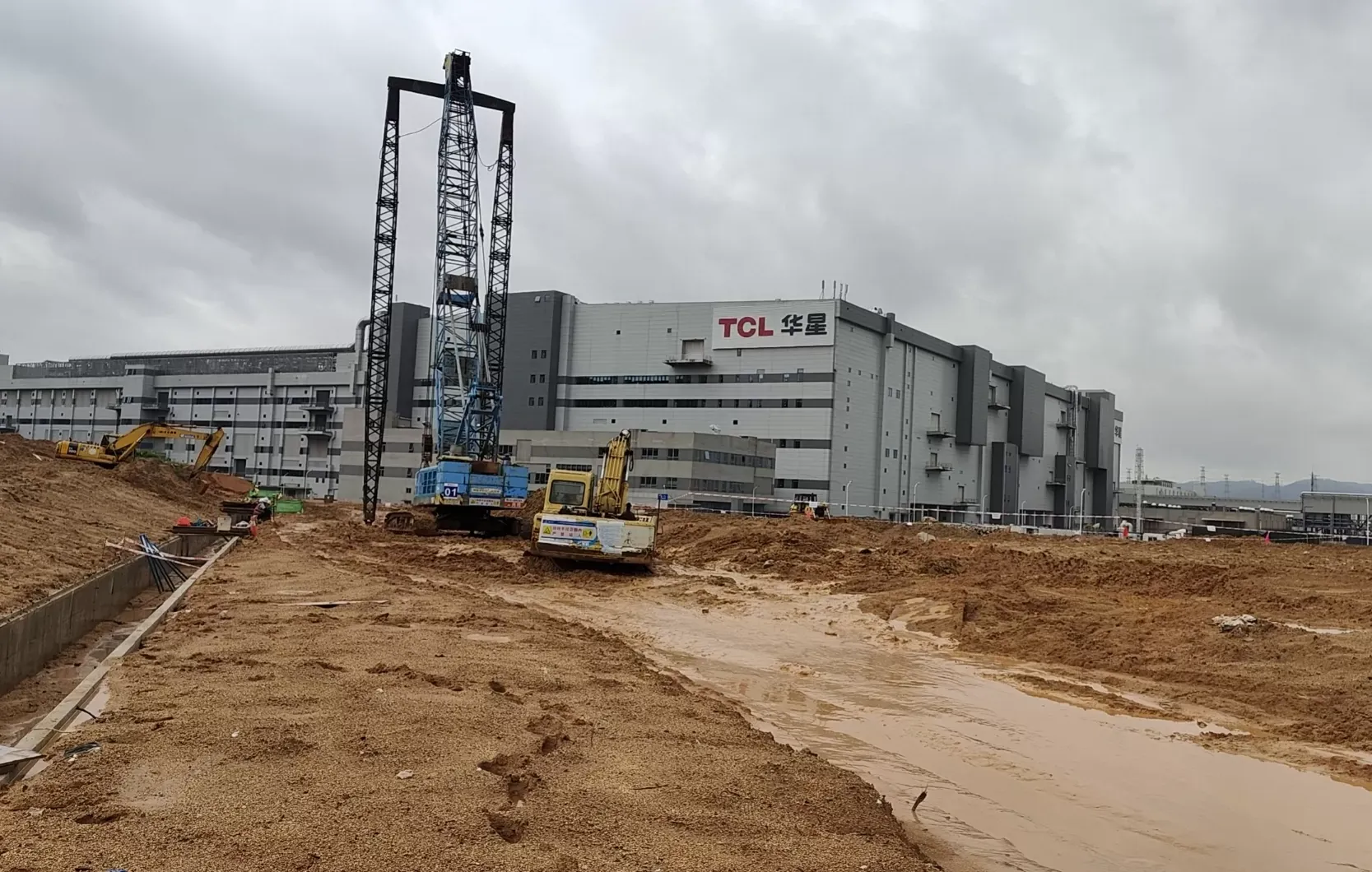
In addition, the project included multiple large industrial buildings and production support facilities. The future production equipment required high precision and operational stability. Therefore, the ground improvement works had to enhance bearing capacity while also controlling differential settlement and improving overall ground uniformity.
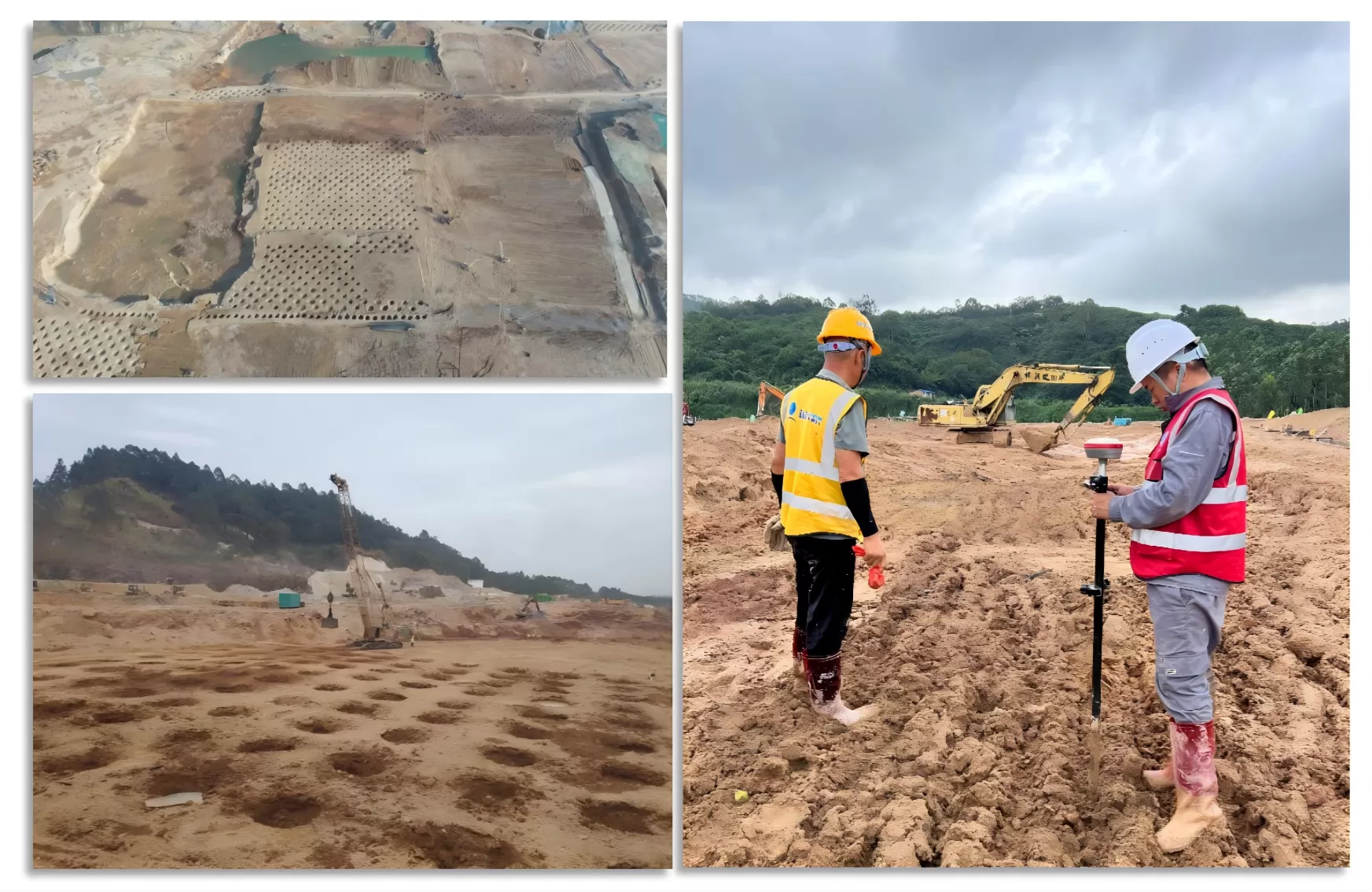
In response to the significant groundwater influence after excavation and the varying treatment depths and improvement requirements across different zones, the project adopted an overall construction sequence of excavation, dynamic compaction, backfilling and further dynamic compaction. The site was treated by zones according to geological conditions, design elevations and future functional requirements.
Dynamic compaction energy levels of 3000kN·m, 8000kN·m, 10000kN·m and 12000kN·m were adopted. Different energy combinations were used to improve the soft ground and backfilled layers in stages, enhancing ground density, bearing performance and overall stability.
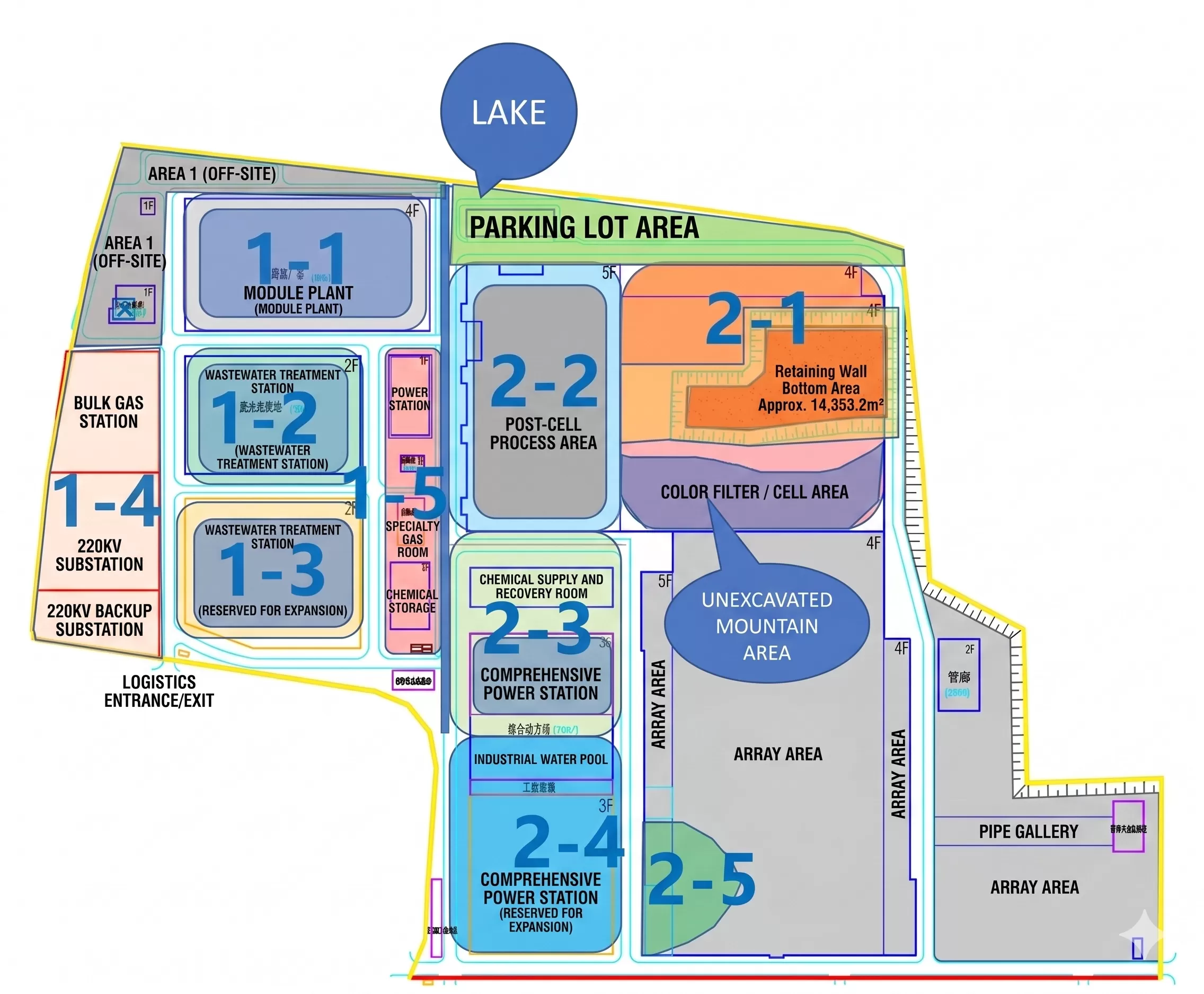
Zone 2-1 was treated using three layers of dynamic compaction. Zones 1-1, 1-2, 1-3, 2-2 and the basement area of Zone 2-3 were treated using two layers of dynamic compaction. Zones 1-4, 1-5, Area 1 outside the red line, part of Zone 2-3, Zones 2-4 and 2-5, and the parking area were treated using one layer of dynamic compaction.
Through a zoned, layered and energy-specific dynamic compaction approach, the project addressed the complex landform of the abandoned quarry pit, the high-water conditions after excavation and the different foundation requirements of various building zones. The solution improved foundation bearing capacity while enhancing ground uniformity and settlement control, providing reliable foundation conditions for subsequent project construction.
Understand related technologies >


-
SolutionsGround Improvement Systems
-
MarketsEnergy & Petrochemical
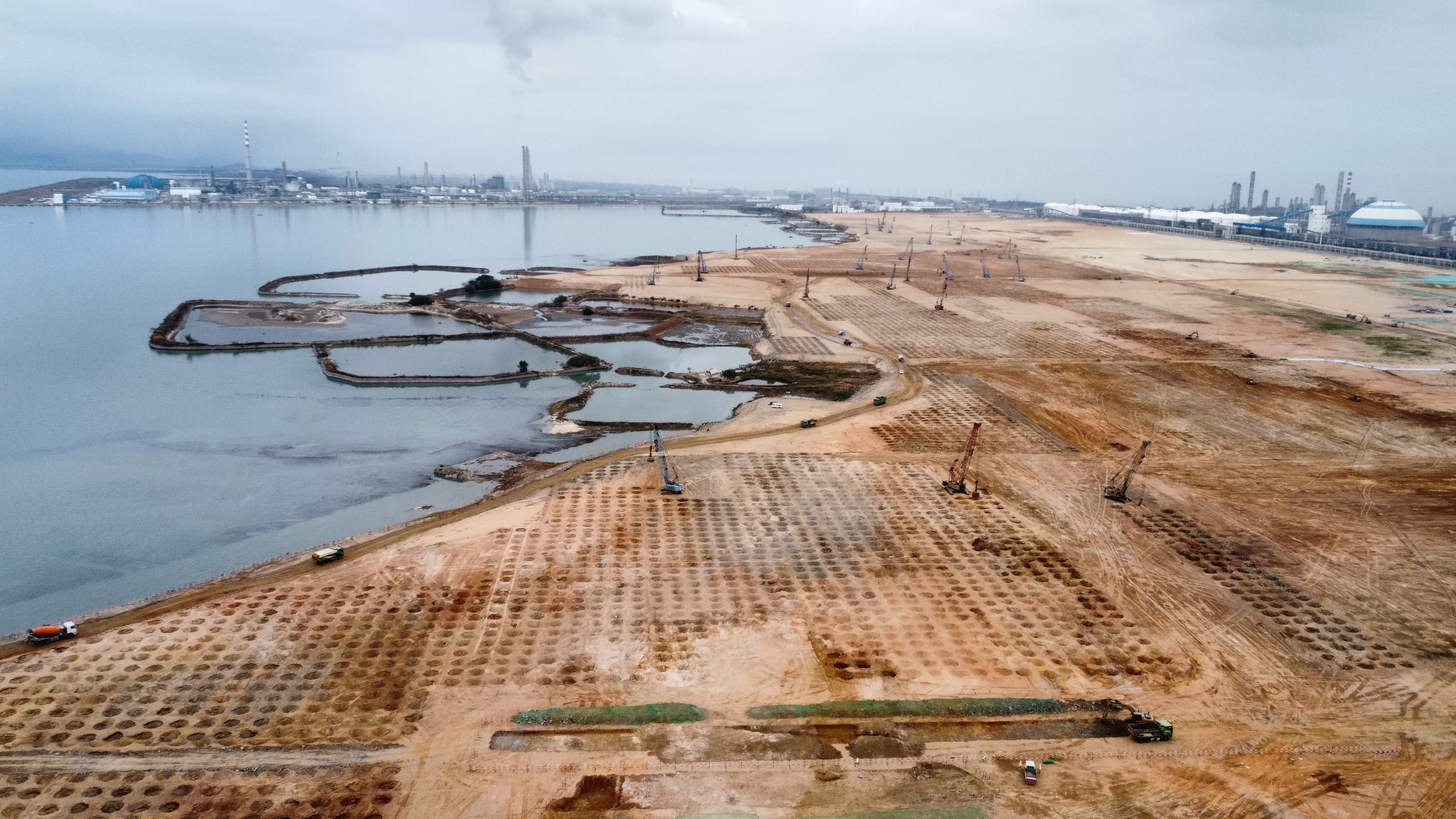
Sino-Saudi Gulei Petrochemical Dynamic Compaction Project
 Gulei Petrochemical Industrial Park, Zhangzhou, Fujian Province, China
-
SolutionsGround Improvement Systems
-
MarketsEnergy & Petrochemical
CNOOC Shell Huizhou Phase III Ethylene Dynamic Compaction Project
Daya Bay Petrochemical Zone, Huizhou, Guangdong Province, China