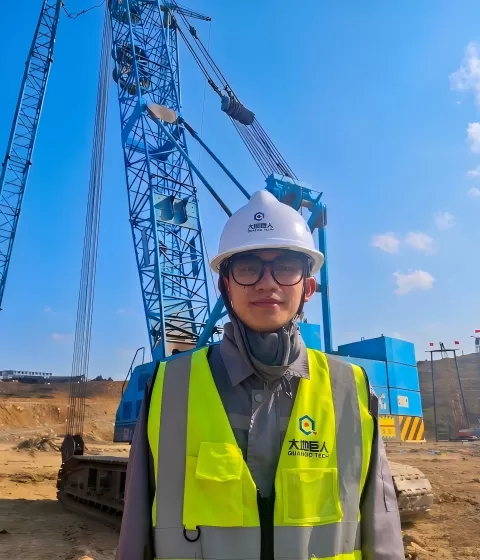





Foundation stabilisation and retrofit for industrial facilities and production systems is a specialised geotechnical engineering solution designed for operational environments, where existing ground conditions must be improved to support structures and highly sensitive production systems without interrupting ongoing operations.
Modern industrial production systems—such as those in petrochemical plants, semiconductor fabrication facilities, photovoltaic manufacturing lines, and other continuous-process industries—require strict control of settlement, differential movement, and floor level tolerance. Even minor ground deformation can lead to equipment misalignment, process disruption, or long-term operational risks.
Our approach integrates geotechnical investigation, structural assessment, and real-time monitoring data to accurately diagnose the causes of foundation instability. Based on load conditions, deformation control requirements, and site constraints—such as limited working space, restricted headroom, and continuous production—targeted stabilisation and retrofit solutions are developed. The focus is not only on improving bearing capacity, but more importantly on achieving controlled deformation and long-term ground stability, ensuring the reliable operation of production systems.
Grouting Reinforcement
Grouting reinforcement improves soil strength and stiffness by injecting engineered materials into the subsoil under controlled pressure without disturbing existing structures or ongoing operations. The process reduces compressibility, fills voids, and enhances ground continuity, while also enabling precise correction of localised settlement.
This method is particularly effective for re-levelling and stabilising foundations beneath production systems with strict tolerance requirements, where even minor deformation can affect equipment alignment and operational performance. It is applicable to a wide range of soil conditions, including sand, silt, clay, and fill materials, and is well suited to confined working environments.
Static Pressed Pile Reinforcement
Static pressed pile reinforcement transfers structural loads to deeper competent strata through hydraulic jacking, using the existing structure and equipment loads as reaction force. By pressing prefabricated piles into stable bearing layers, this method effectively controls settlement and long-term deformation while maintaining a high level of construction stability.
As a low-disturbance technique with minimal vibration and noise, it is particularly suitable for operational industrial facilities where production systems are sensitive to movement and cannot tolerate interruption. It is commonly applied in soft to medium soil conditions, including clay, silt, sand, and fill materials.
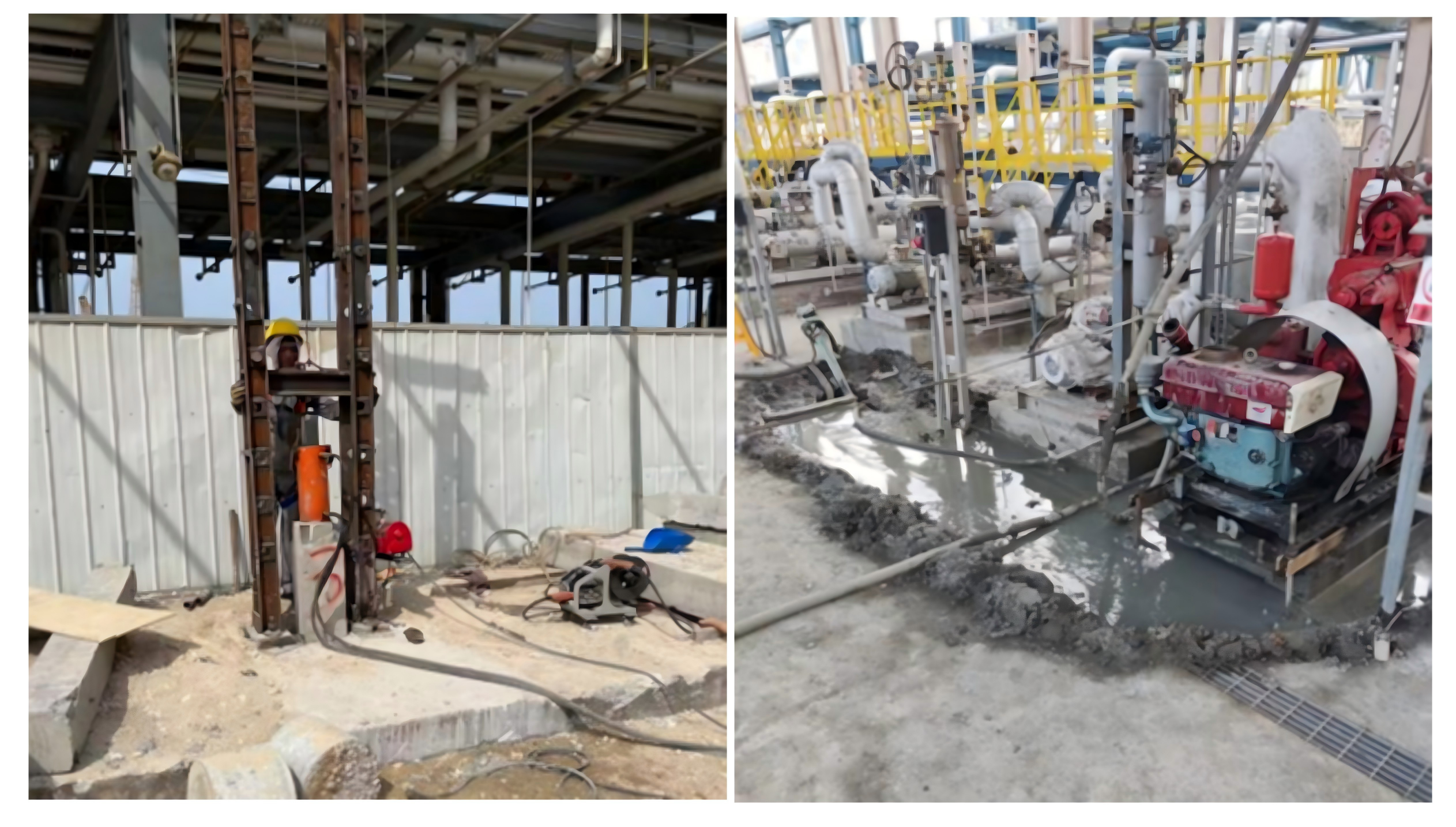
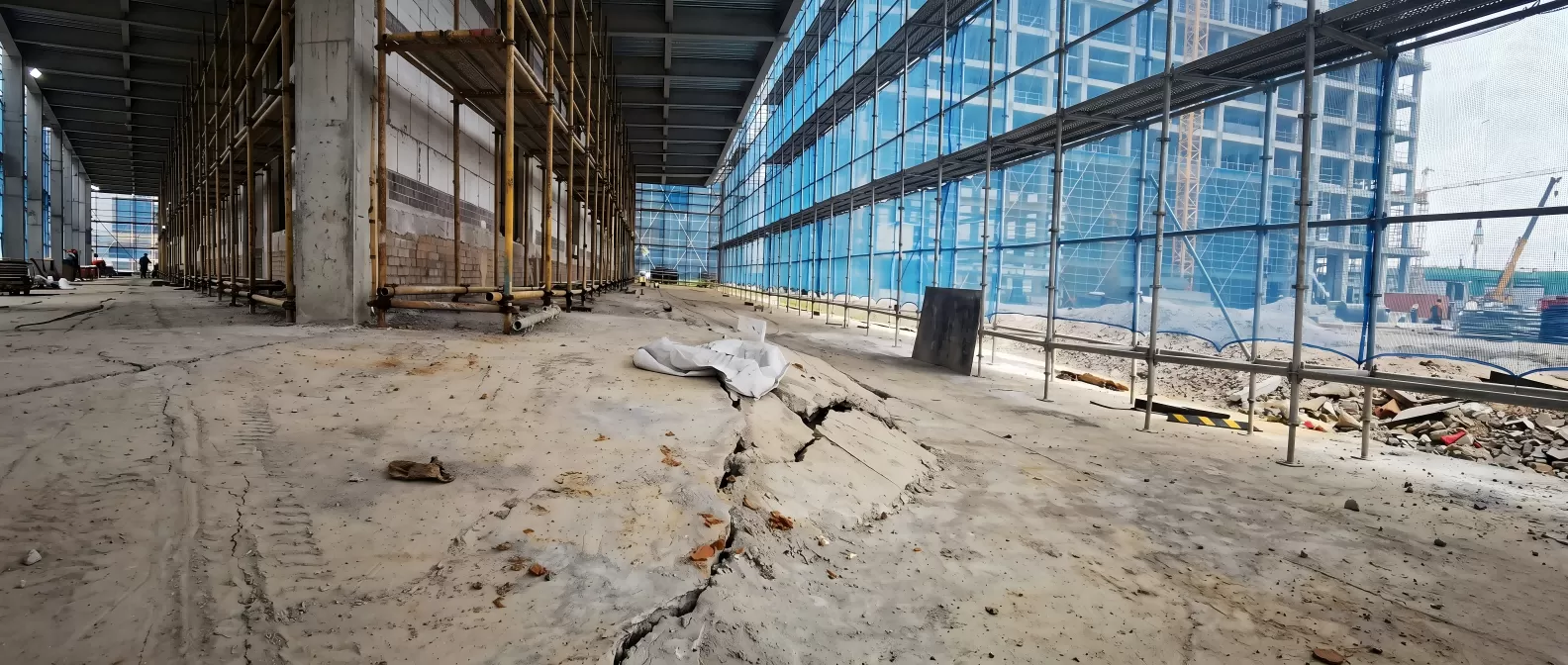
This solution is applied in industrial facilities where foundation conditions affect structural performance and production system stability. Typical scenarios include settlement or differential movement leading to equipment misalignment, floor unevenness impacting production accuracy, increased loading due to process upgrades, and structural deformation caused by adjacent construction, deep excavation, or long-term ground behaviour.
It is widely used in petrochemical plants, semiconductor and electronics manufacturing facilities, photovoltaic production lines, and other heavy industrial environments with continuous production systems. When such conditions compromise operational precision, safety, or reliability, foundation stabilisation and retrofit provide an effective means to restore performance and extend the service life of both structures and production systems without disrupting ongoing operations.