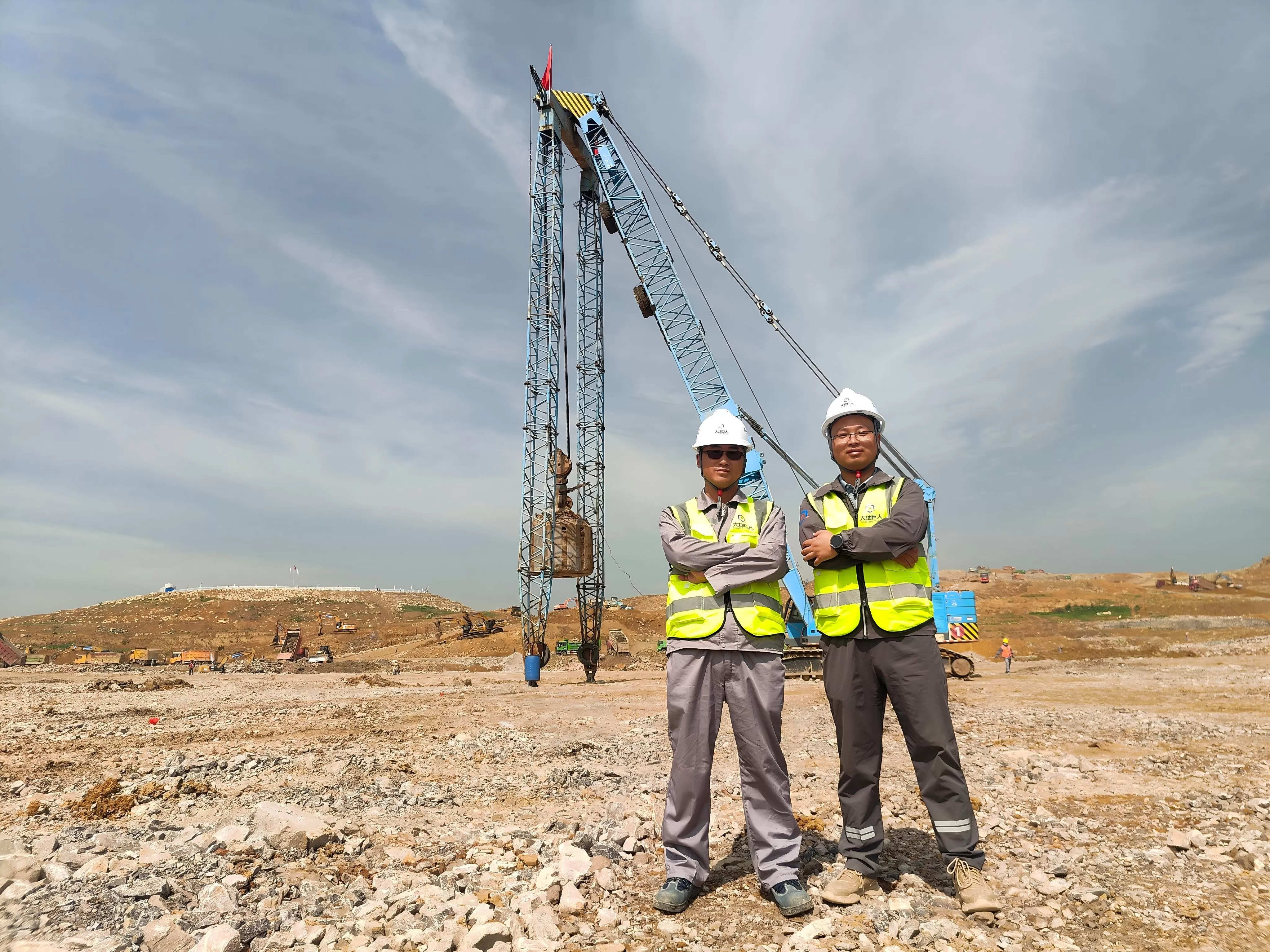





Dynamic Replacement is a ground improvement system designed to treat very soft or weak soils by forming large-diameter stone columns through high-energy tamping.
The process involves repeatedly dropping a heavy tamper into craters backfilled with coarse granular materials such as rockfill or crushed stone. Under successive impacts, the material is driven into the ground to form dense dynamic replacement columns. These columns interact with the surrounding soil to create a composite ground system, significantly improving load-bearing capacity and reducing settlement.
Column materials typically consist of well-graded, durable coarse aggregates, including rock fragments, crushed stone, slag, industrial by-products, or recycled construction materials. To ensure stability and compaction quality, particles larger than 300 mm should generally not exceed 30% of the total material.
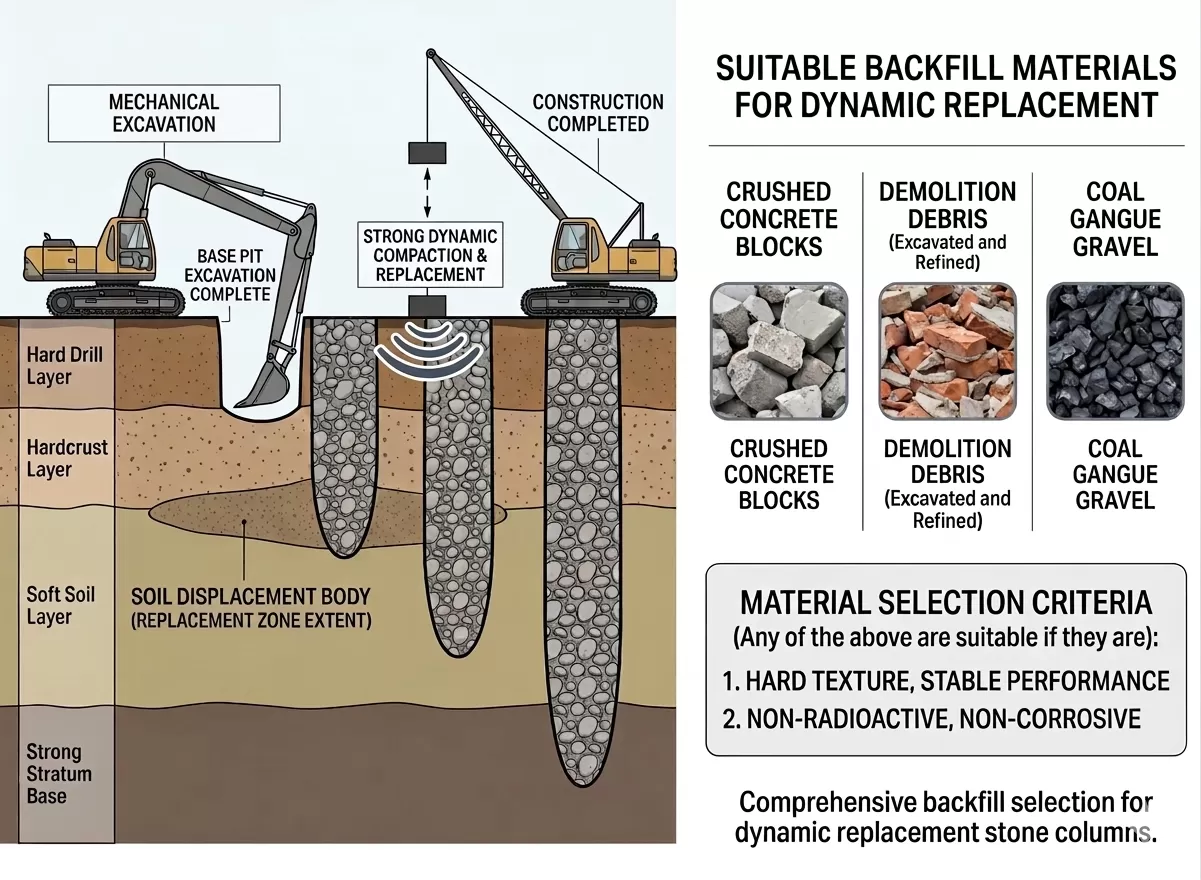
Dynamic Replacement is defined by the simultaneous satisfaction of the following conditions:
- The crater must be backfilled with granular material that differs from the in-situ soil.
-
The static contact pressure of the tamper must exceed 80 kPa.
-
Replacement columns are formed with a density significantly higher than the soil between columns
-
The column material remains stable throughout the compaction process
When these criteria are met, dense replacement columns are successfully formed within weak ground.
The ground improvement mechanism integrates multiple geotechnical effects:
-
Dynamic compaction, which densifies the soil between columns
-
Stone column reinforcement, which increases local stiffness and load transfer
-
Large-diameter drainage paths, provided by the coarse granular material
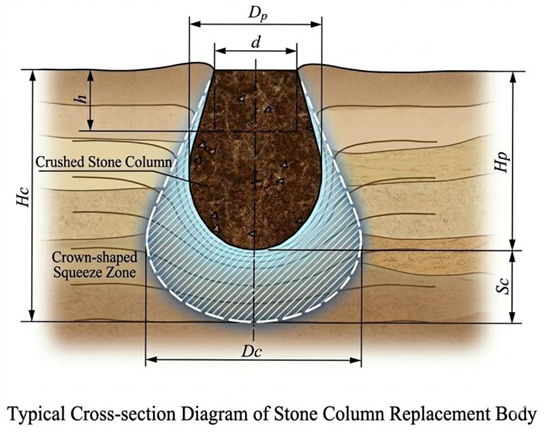
Through combined drainage and densification, soft silts and cohesive soils both beneath and between the columns are improved in density and mechanical behaviour.
The effective treatment depth is typically defined as the column length plus the thickness of the compacted bearing layer beneath the column base, and is determined through field trials and site-specific design experience.
Dynamic Replacement is particularly suitable for very soft ground conditions where conventional compaction methods are ineffective, especially where deformation tolerance is moderate.
Applicable soil conditions include:
-
Soft clay and organic soils
-
Silty or saturated cohesive deposits
-
Loose sand and silty sand formations
The method effectively increases bearing capacity, reduces settlement, and can significantly mitigate liquefaction risks in sandy soils.
Typical applications include:
-
High-fill platforms
-
Industrial plants and warehouses
-
Port and logistics yards
-
Airport infrastructure
-
Storage tank foundations
-
Transport corridors and heavy-duty pavements