





The primary objective in addressing slab settlement is to arrest ongoing deformation and restore ground support conditions. Conventional grouting methods typically rely on cement-based materials; however, their relatively high density introduces additional load to the underlying soil, which may aggravate settlement and induce secondary deformation.
Void Grouting and Slab Stabilisation is a targeted ground improvement technology developed for slab-on-grade structures affected by loss of support or excessive settlement. The system integrates structural support, controlled lifting, and lightweight void filling.
Within voided zones, support elements such as load-bearing piles or grout-inflatable bladders are installed to provide immediate support and enable controlled re-levelling of the slab. Lightweight grout is then injected through pre-drilled ports to fill subsurface voids. This process restores contact between the slab and the subgrade, improves bearing capacity, enhances overall stability, and prevents further settlement.
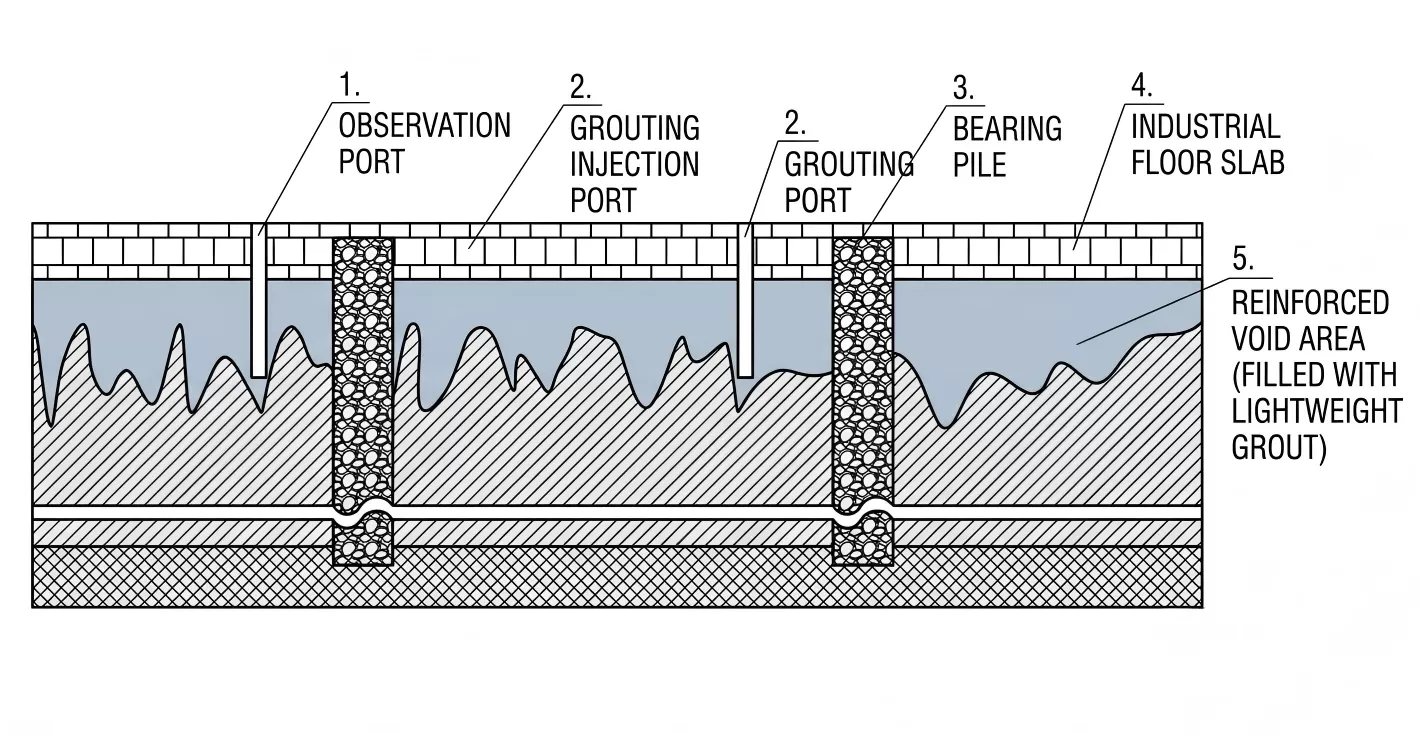
The solution is developed based on integrated site investigation methods, including geophysical surveys, borehole verification, endoscopic inspection, and long-term monitoring of foundation and slab performance to accurately define subsurface void conditions.
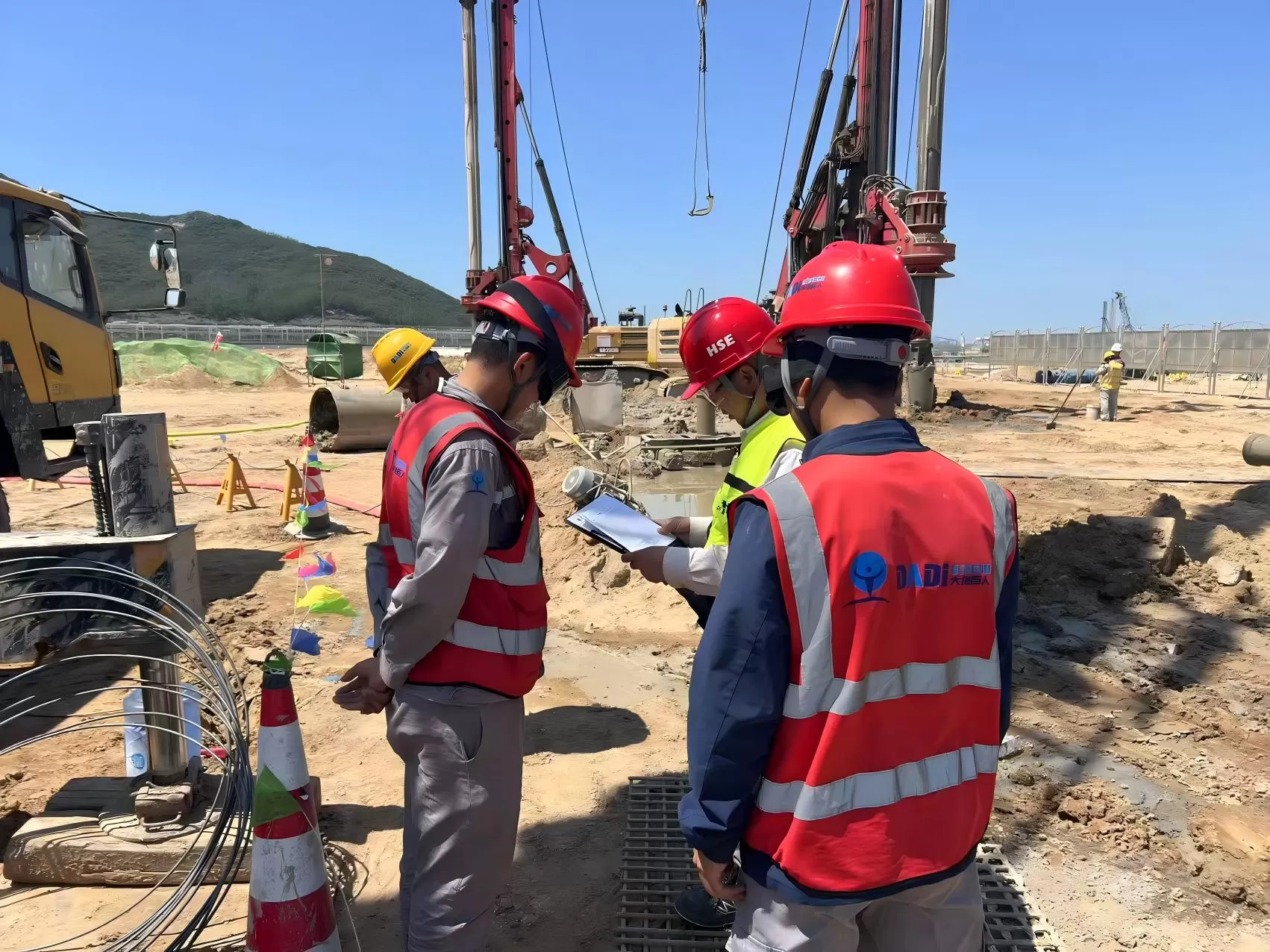
Remedial works are carried out through drilling and injection of lightweight materials such as foamed concrete, ensuring effective void filling with minimal additional load. Where required, the system may be supplemented by grouting reinforcement and the installation of anchor-driven piles to further improve stability.
The typical construction sequence includes:
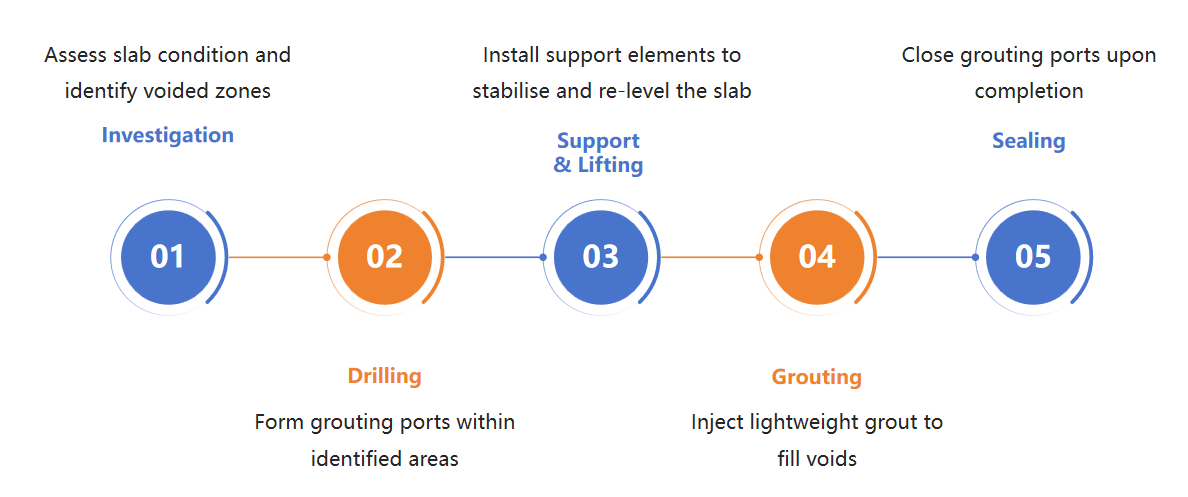
This technology is applicable to slab-on-grade structures where subsurface voids exist, or where large-area ground settlement has resulted in loss of support between the slab and the underlying soil.
It is particularly suitable for:
- Conditions requiring termination of ongoing settlement
- Sites with restricted working space
- Projects requiring minimal construction disturbance
- Situations where increased bearing capacity is needed without introducing additional load
- Industrial and infrastructure facilities requiring controlled and localised stabilisation