
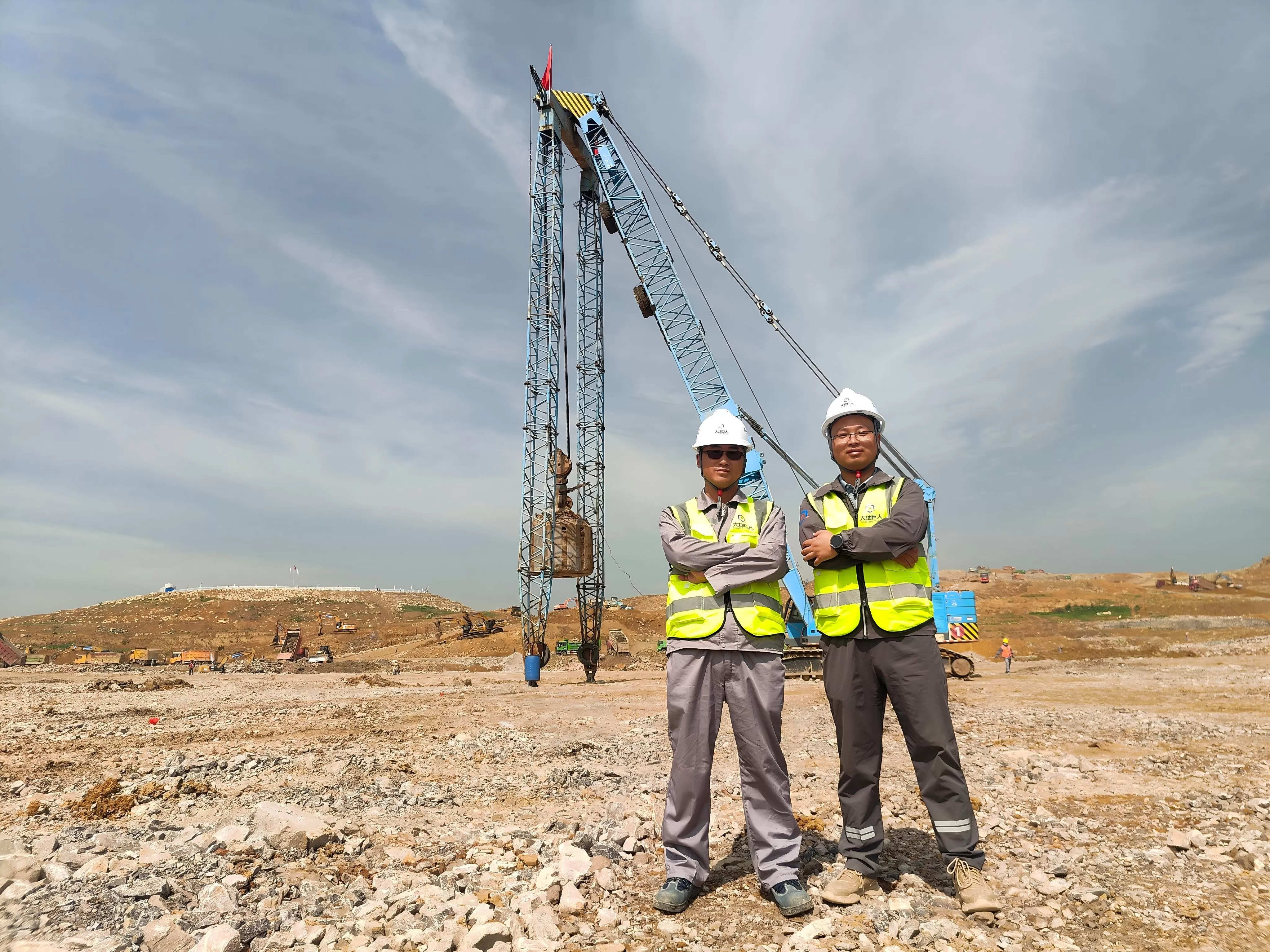
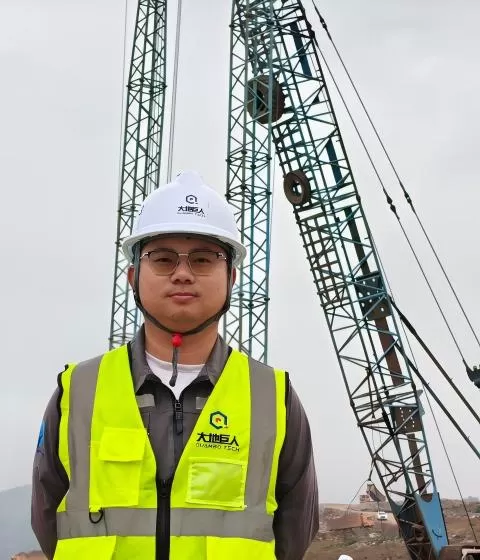
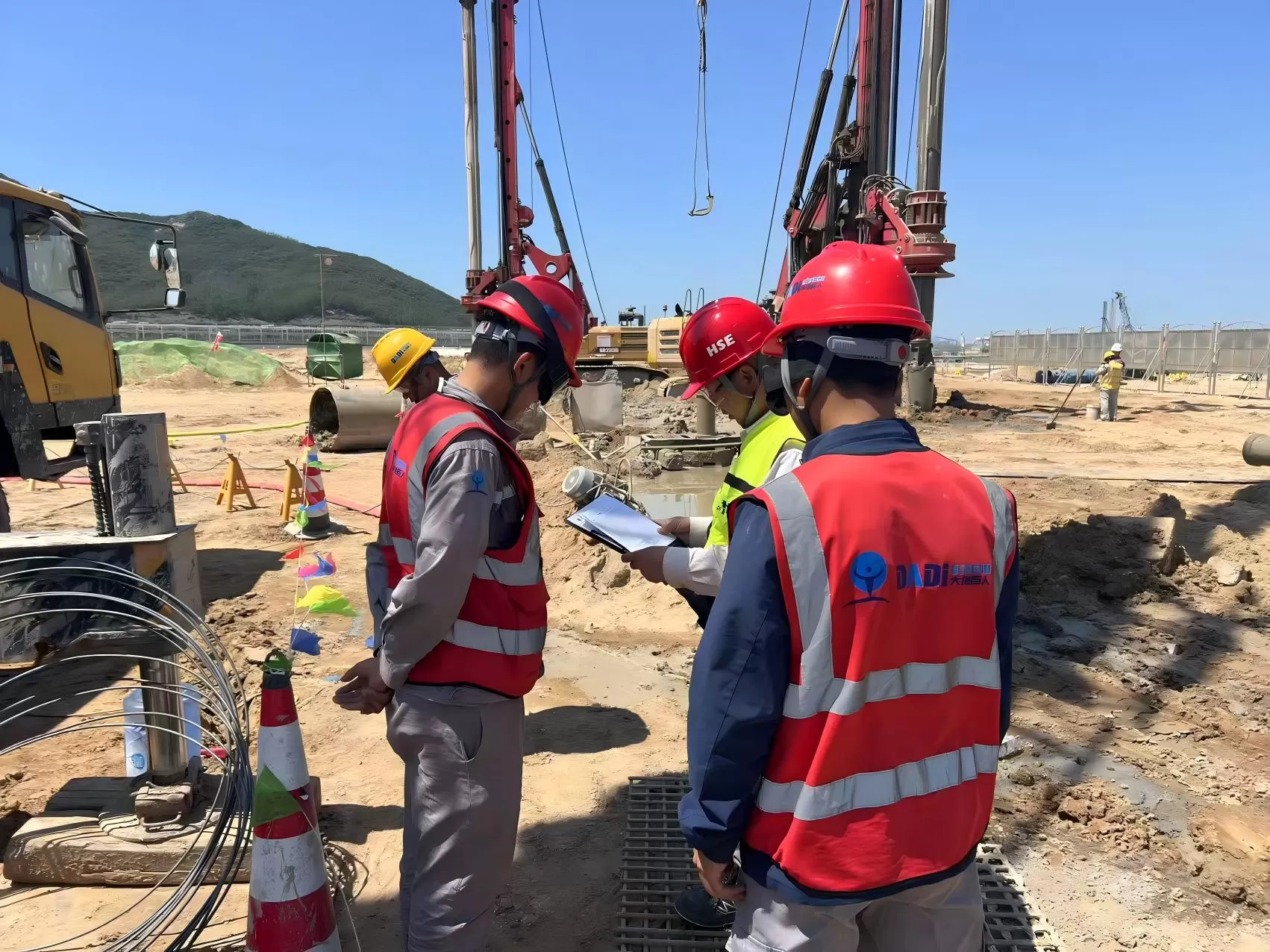
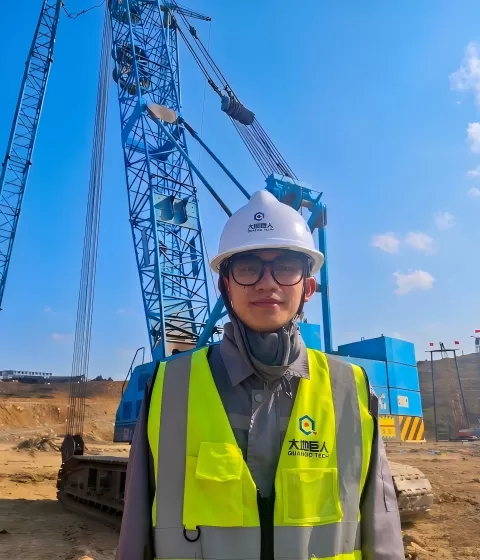





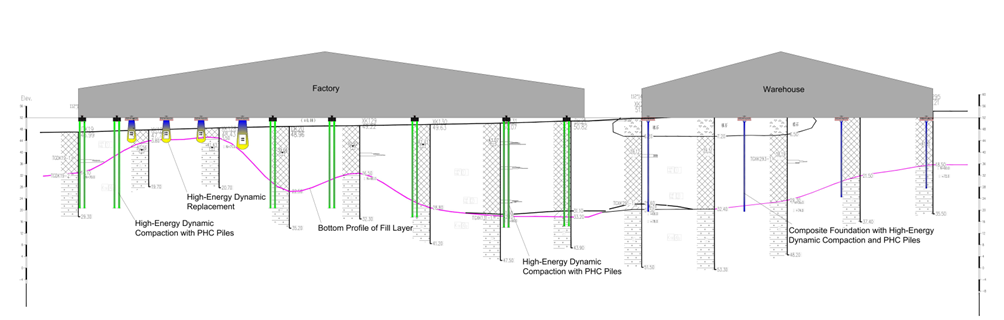
The Dynamic Compaction–Rigid Pile Composite Foundation System combines ground densification with deep load transfer to deliver an efficient and reliable solution for sites with deep fills or complex ground conditions.
Dynamic compaction is first applied to densify the fill and improve the overall bearing capacity of the ground. Through high-energy impacts, soil particles are rearranged and compacted, forming dense zones or replacement columns within the fill mass.
While dynamic compaction significantly improves ground strength and stiffness, additional settlement control may be required where structural loads are high or deformation tolerance is limited. In such cases, rigid piles are introduced to transfer loads to deeper competent strata.
By integrating dynamic compaction with rigid piles, the ground and piles act together to support structural loads. This load-sharing mechanism significantly reduces the required pile ratio, resulting in a more economical and efficient foundation system.
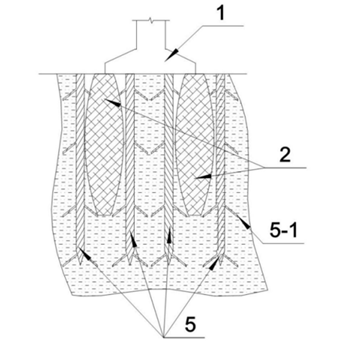
Dynamic Compaction Column Pile Composite Foundation
Dynamic compaction applied to thick fill deposits forms densified compaction columns or replacement columns, improving the strength and stiffness of the ground to a certain depth.
Where deeper improvement is required, fracture grouting may be introduced. Cement-based grout is injected according to ground conditions and load requirements, forming reinforcing bodies within the soil after curing.
The combination of densified soil columns and grouted reinforcement forms high-strength dynamic compaction piles, which derive their load-bearing capacity from both the compacted soil and the hardened grout.
Together with the surrounding soil, they form a composite foundation system capable of providing high bearing capacity while effectively controlling settlement.
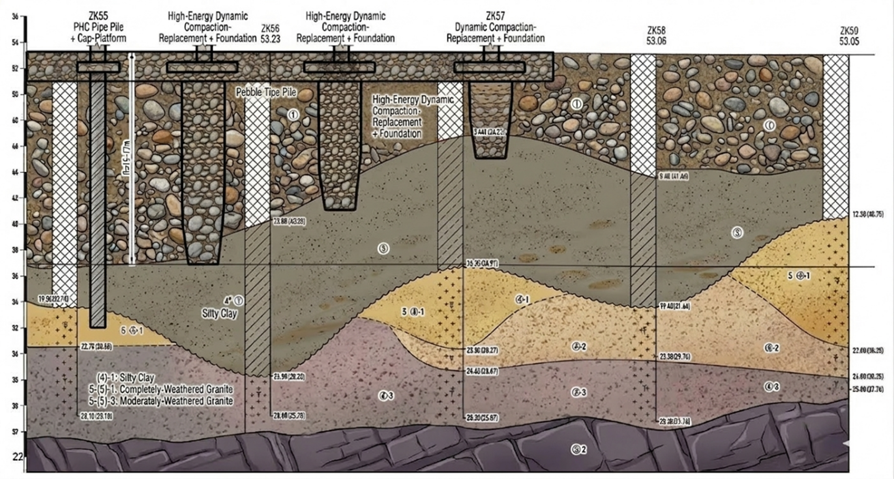
Dynamic Compaction Combined with Rigid Piles
For projects requiring enhanced load capacity or stricter settlement control, dynamic compaction or dynamic compaction replacement can be combined with pipe piles or other rigid pile systems.
The typical approach includes:
- geotechnical investigation to define soil conditions and fill thickness
- compaction energy design based on structural loads and settlement criteria
- foundation layout planning, including spacing and energy levels of compaction points
- arrangement of compaction or replacement points beneath foundations to ensure uniform improvement
This integrated system enables both ground densification and deep load transfer, improving overall foundation performance.
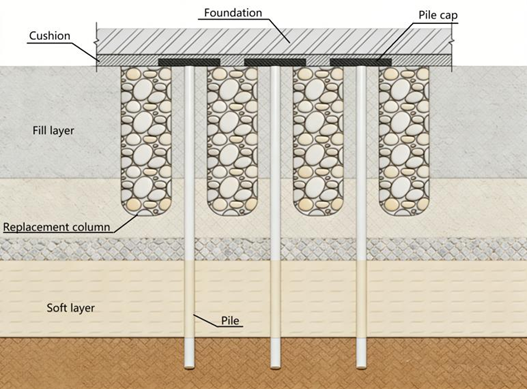
Long Pile–Short Column Composite Foundation
The Long Pile–Short Column Composite Foundation combines deep rigid piles with shallow dynamic compaction replacement columns to form a hybrid load-bearing system.
Dynamic compaction replacement columns improve the strength and stiffness of the upper ground layers, while a central long pile extends through fill and soft soils to reach a competent bearing stratum.
Structural loads are shared between the columns and the pile. The columns enhance near-surface support and load distribution, while the pile transfers loads to deeper, stronger layers through shaft friction and end bearing.
This interaction results in improved stress distribution and effective settlement control across the foundation system.
The method is particularly suitable for sites with:
- deep uncontrolled fill deposits
- soft soil layers
- large total settlement
- differential settlement
- uneven stress distribution
Compared with conventional deep foundation solutions, it offers lower construction cost, shorter construction time, and reliable performance.
Large development platforms formed through mountain excavation and backfilling or land reclamation often contain deep uncontrolled fills that are not suitable for direct foundation support.
Such ground conditions may lead to:
- insufficient bearing capacity
- excessive settlement
- differential settlement
The Dynamic Compaction–Rigid Pile Composite Foundation System provides an effective solution for these challenges, particularly in projects involving:
- deep fill deposits
- soft soil conditions
- high groundwater levels
- complex geological environments
By combining ground improvement with structural load-bearing elements, the system delivers stable, efficient, and cost-effective foundation performance for large-scale industrial and infrastructure developments.


-
SolutionsGround Improvement Systems
-
MarketsEnergy & Petrochemical
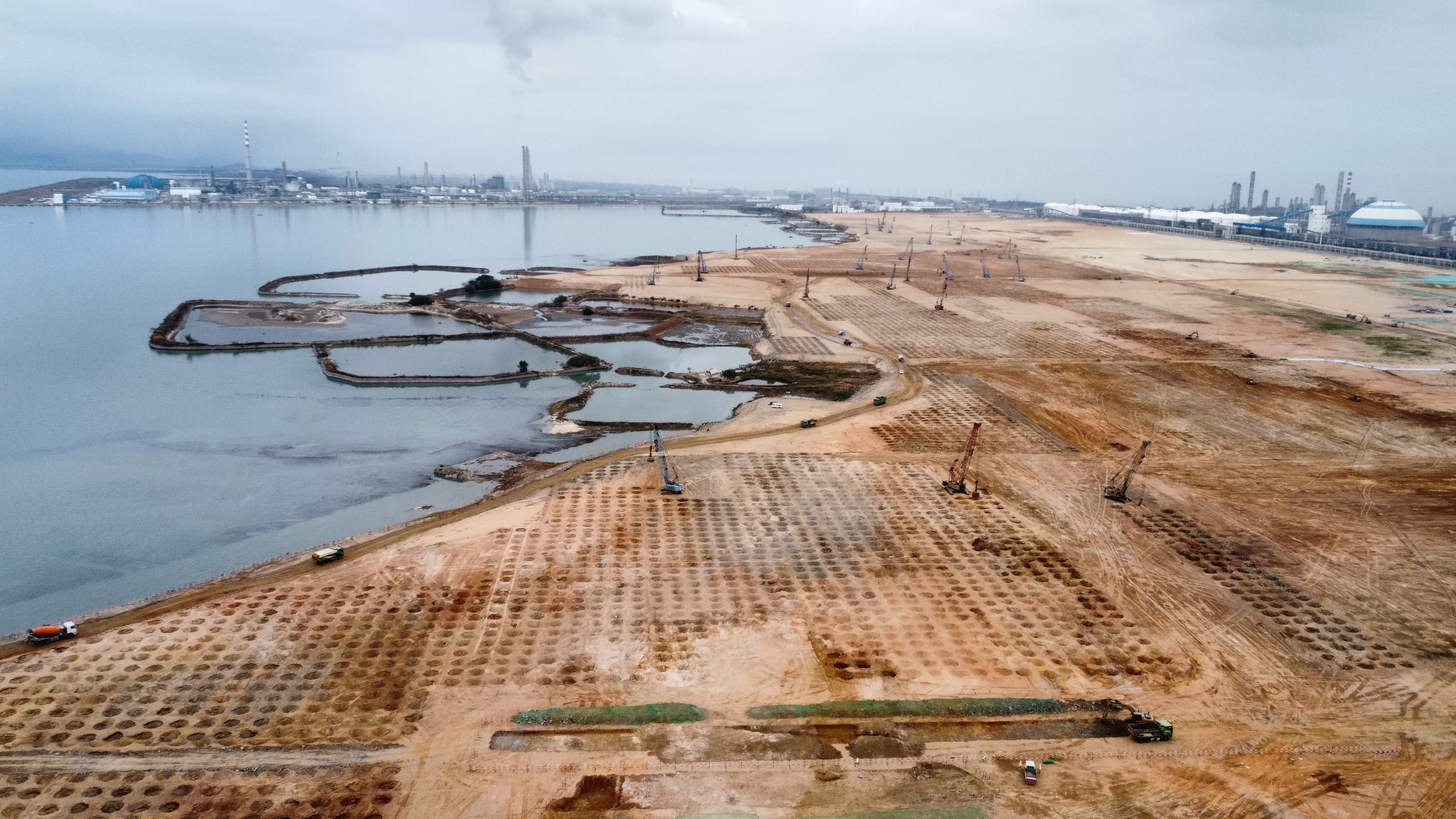
Sino-Saudi Gulei Petrochemical Dynamic Compaction Project
 Gulei Petrochemical Industrial Park, Zhangzhou, Fujian Province, China
-
SolutionsGround Improvement Systems
-
MarketsEnergy & Petrochemical
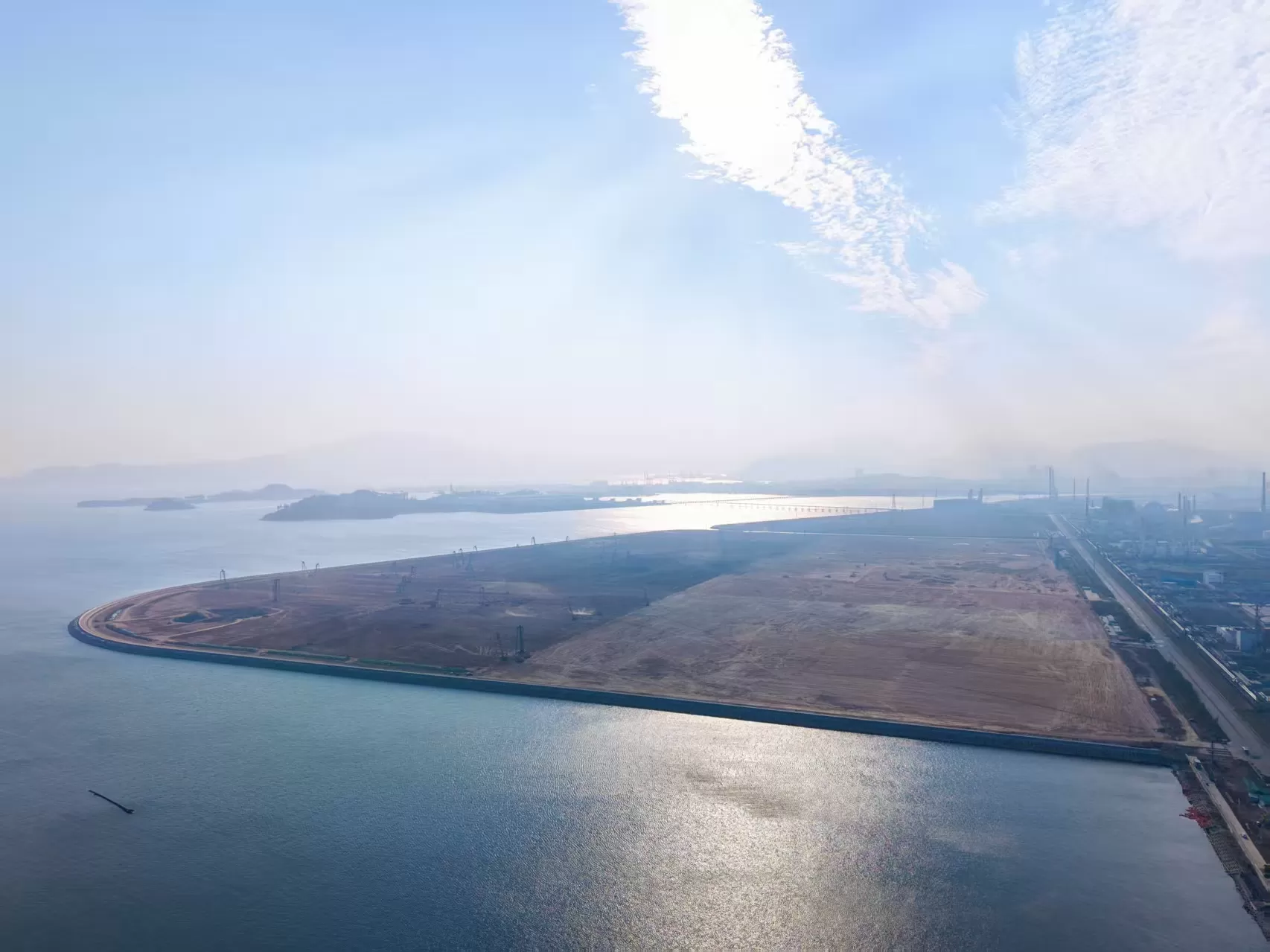
CNOOC Shell Huizhou Phase III Ethylene Dynamic Compaction Project
Daya Bay Petrochemical Zone, Huizhou, Guangdong Province, China
-
SolutionsGround Improvement Systems
-
MarketsIndustrial & Manufacturing
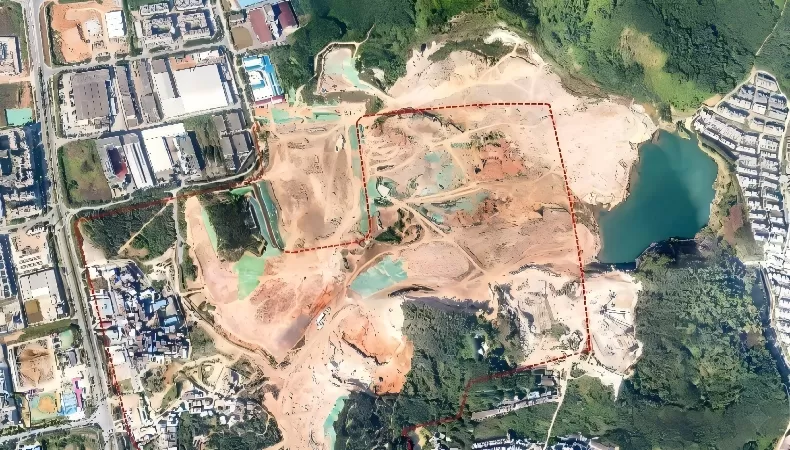
TCL CSOT t9 Display Panel Dynamic Compaction Project
Huangpu District, Guangzhou, Guangdong Province, China