






Slopes formed in high-fill developments are often characterised by significant height, limited space to achieve the required slope gradient, and mixed or heterogeneous soil conditions within the original slope mass. These factors introduce complexity in both construction and long-term stability control.
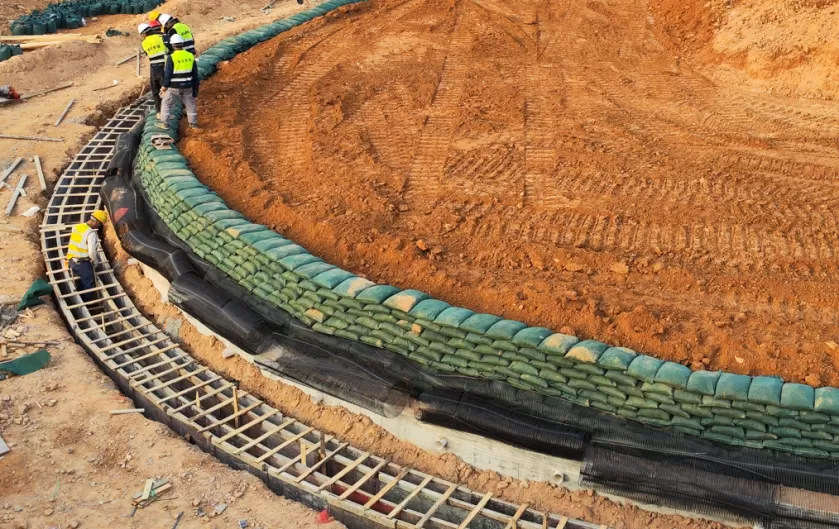
Reinforced soil slope systems provide an effective solution by incorporating geosynthetic reinforcement layers—such as geogrids and geotextiles—within compacted soil fills. Through soil–reinforcement interaction, the tensile and shear resistance of the soil mass is significantly improved, enabling the slope to function as a stable composite structure.
Compared with conventional stabilisation methods—such as gravity retaining walls, cantilever retaining walls, soil nailing, and frame beam systems—reinforced soil slopes offer greater adaptability to site constraints, improved constructability, and more cost-efficient solutions, particularly in high-fill environments.
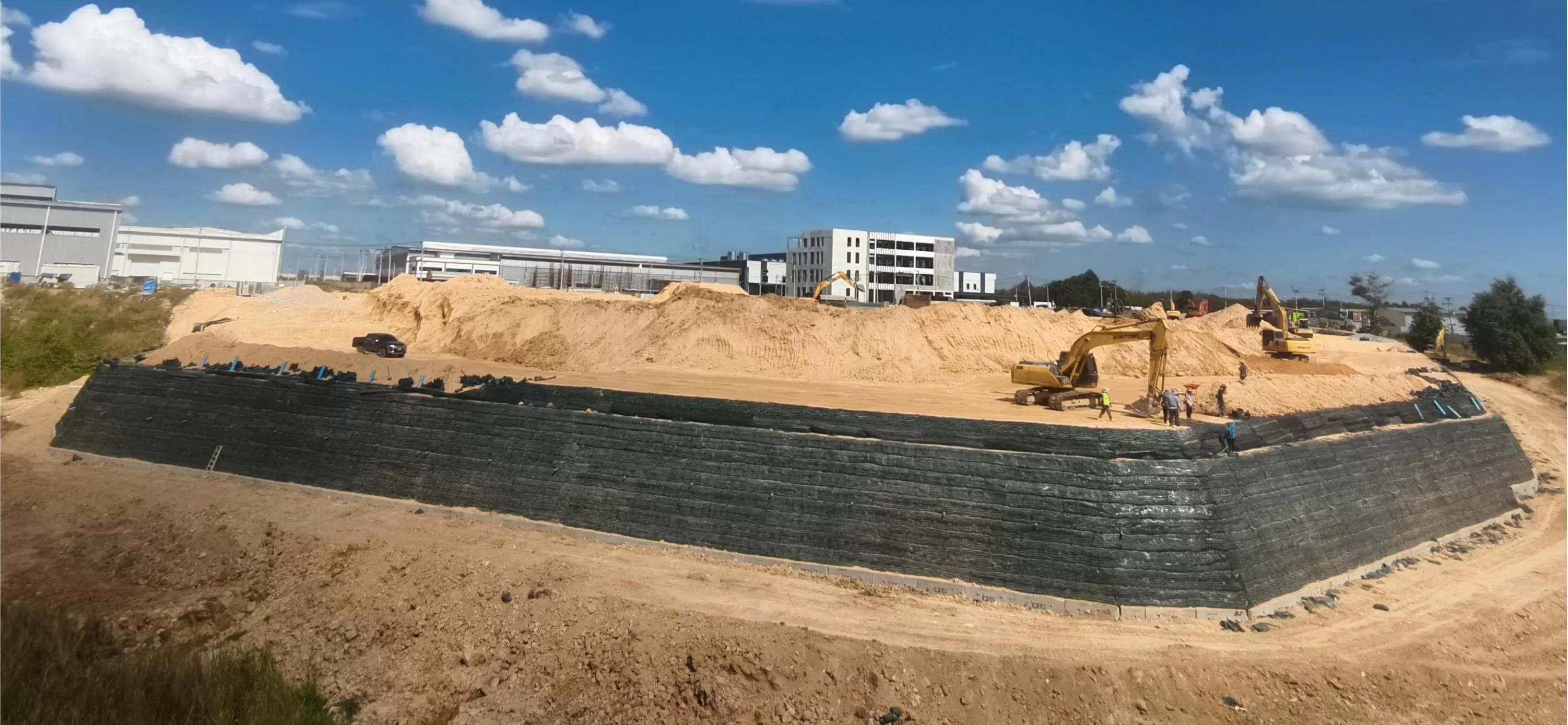
The system is designed based on slope geometry, site constraints, adjacent loading conditions, and subsurface characteristics. A typical reinforced soil slope integrates three key components: reinforced soil structure, drainage system, and surface protection system.
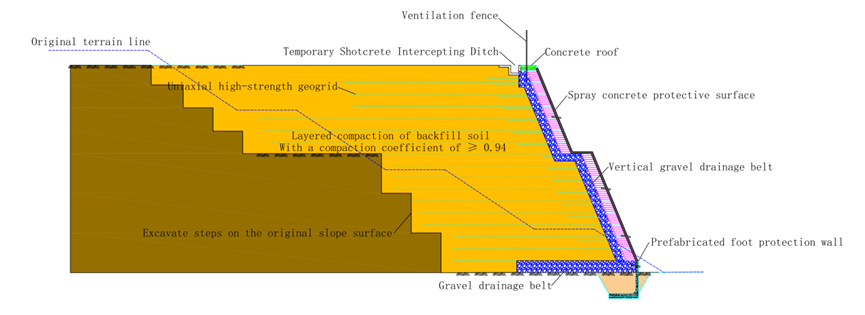
Reinforced Soil Structure
Reinforcement layers are installed within compacted fill to enhance internal stability and control deformation of the slope mass.
- Reinforcement materials: uniaxial geogrids and woven geotextiles
- Fill material: locally sourced soils placed and compacted in layers
- Compaction requirement: minimum degree of compaction ≥ 0.94
Surface Protection
Slope faces are protected to minimise erosion and ensure long-term durability.
Typical protection systems include:
- Steel mesh with shotcrete facing
- Ecological slope protection systems
- Precast reinforced concrete facing panels
Drainage System
Effective drainage is essential to prevent water accumulation and mitigate hydrostatic pressure within the slope.
Typical measures include:
- Interception and drainage facilities at the slope crest to prevent surface runoff erosion
- Drainage channels at both the slope crest and slope toe
- Weep holes installed approximately 300 mm above ground level, spaced at 2.0–4.0 m intervals, and arranged in a staggered pattern across the slope face
- Internal vertical and horizontal drainage layers within the reinforced soil mass to facilitate water dissipation
- Discharge of collected water through designated drainage outlets
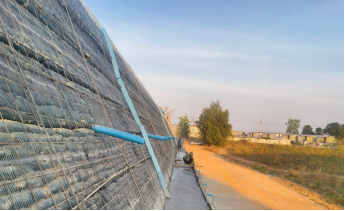
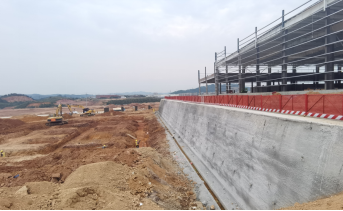
Reinforced soil slope systems are widely applied in projects where slope heights are large and available space is insufficient to achieve the required slope gradient, particularly in high-fill site formation works.
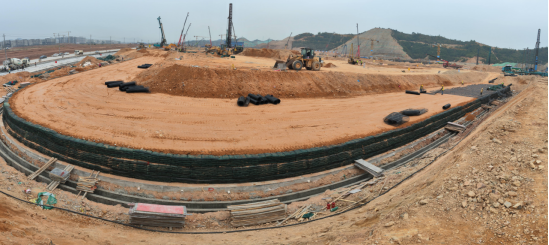
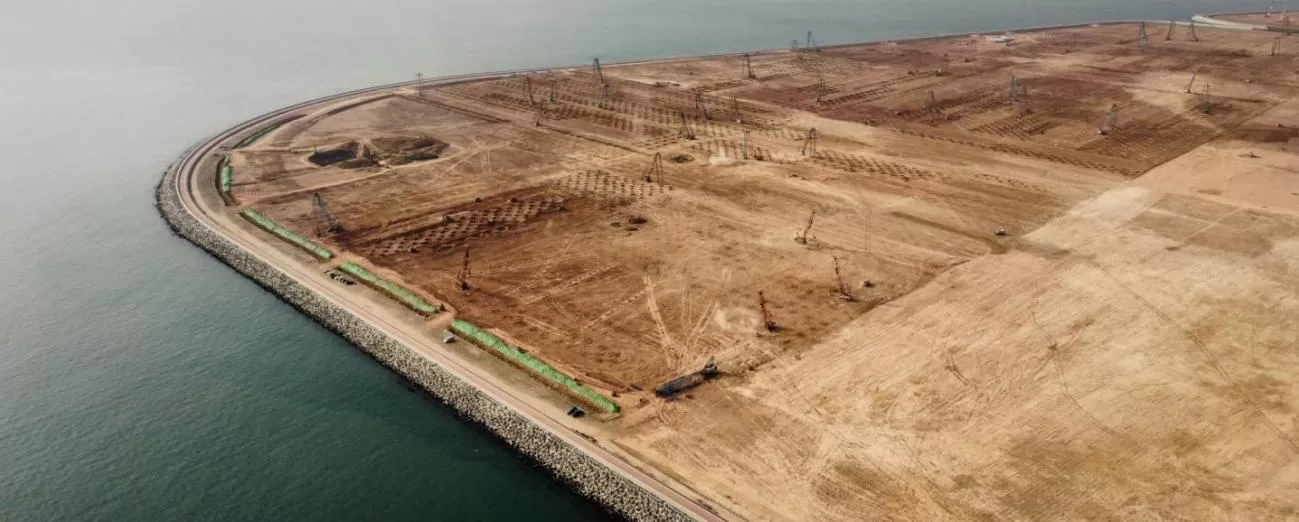
This solution has been successfully implemented in large-scale infrastructure and industrial developments across China and Southeast Asia, delivering reliable and cost-effective performance under complex ground conditions.


-
SolutionsGround Improvement Systems
-
MarketsRenewable Energy & Advanced Materials
Wuzhou High-Tech Zone Photovoltaic Industrial Park Ground Improvement Project
 Wuzhou, Guangxi Zhuang Autonomous Region, China
-
SolutionsGround Improvement Systems
-
MarketsEnergy & Petrochemical
CNOOC Shell Huizhou Wastewater Treatment Plant Project
Daya Bay Petrochemical Zone, Huizhou, Guangdong Province, China