





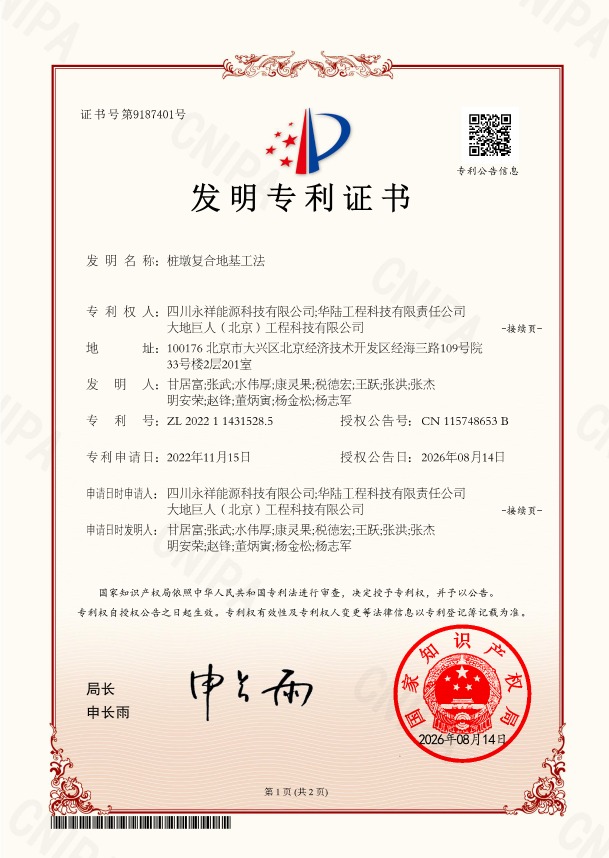
In August 2026, the Pile-Pier Composite Ground Improvement Method, developed with the participation of QUAMBO, was officially granted an invention patent by the China National Intellectual Property Administration.
In practice, we call the concept “Ground Strider.”
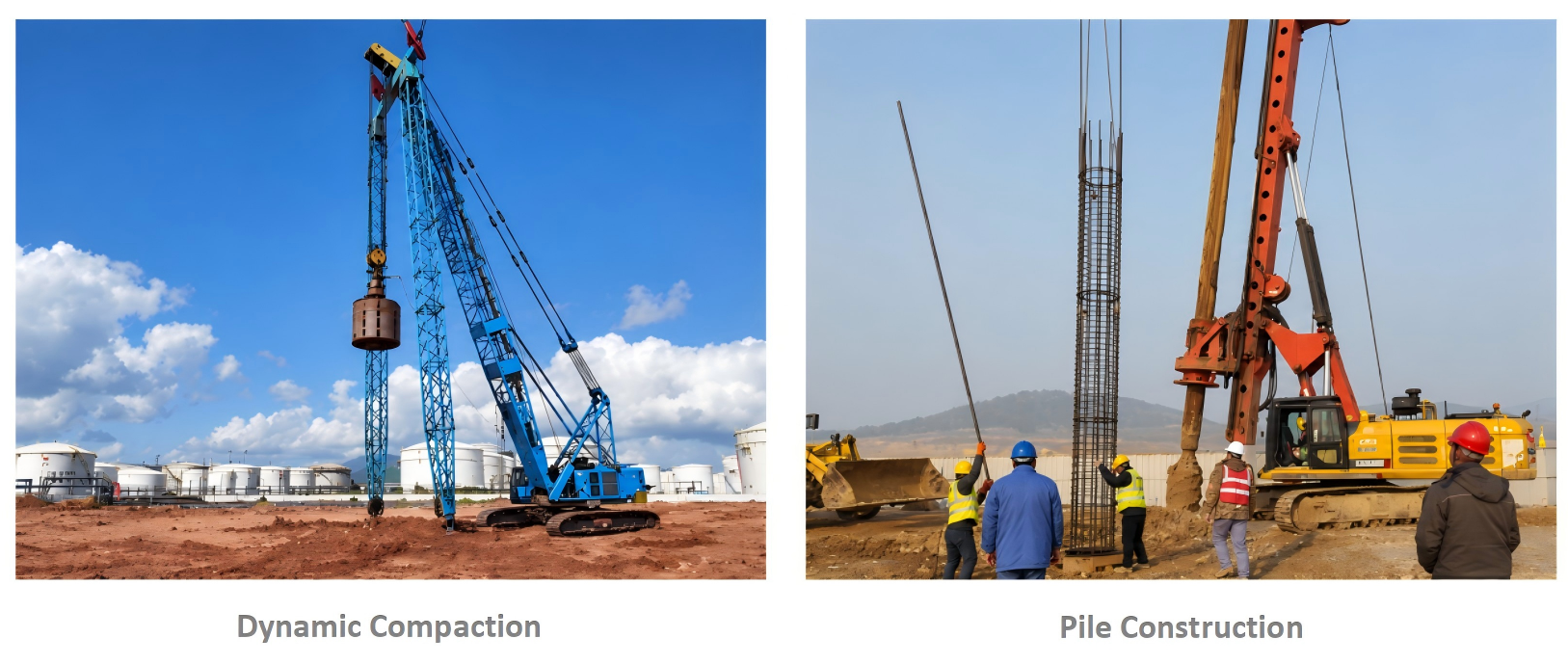
Designed for deep fill ground, the method integrates dynamic compaction, dynamic replacement piers, and settlement-reducing piles to address bearing capacity and settlement requirements at different depths, forming an integrated ground improvement system.
 Deep Fill Ground: Balancing Bearing Capacity and Settlement
Deep fill ground has long presented a recurring challenge in geotechnical engineering.
As large industrial parks, new-energy developments, and mountainous site-formation projects continue to expand, engineered fill deposits exceeding 10 or even 20 metres in thickness are becoming increasingly common.
As fill depth increases, the design challenge extends beyond bearing capacity. Compression of deeper fill layers and differential deformation can have a significant influence on foundation settlement. Ground improvement therefore needs to consider not only bearing performance and settlement control, but also constructability, programme, and project economics.
The challenge in deep fill ground is therefore not simply a choice between dynamic compaction and piling. It is how to allocate different treatment measures to different locations and depths according to actual engineering requirements.
 The Ground Strider Concept
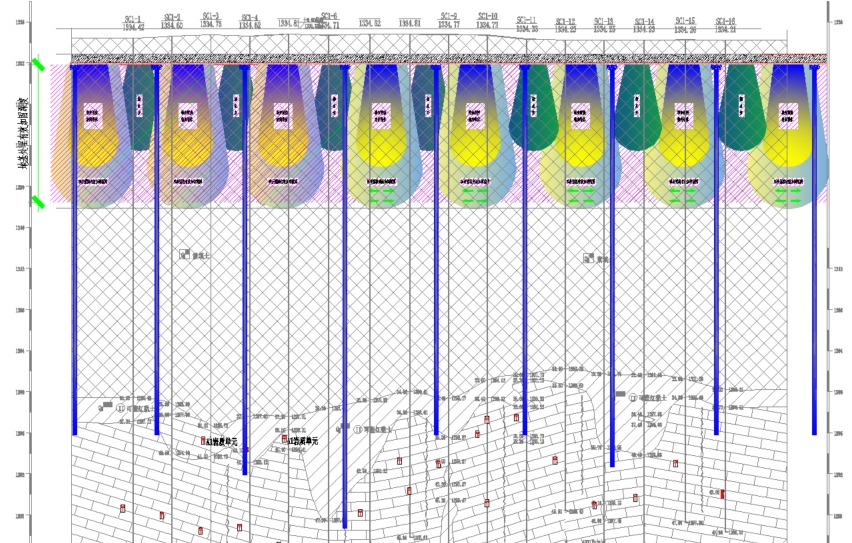
The Pile-Pier Composite Ground Improvement Method assigns different ground-improvement elements to different zones of the foundation system.
This creates the integrated system:
Dynamic Compaction + Dynamic Replacement Piers + Settlement-Reducing Piles
The configuration inspired the name Ground Strider: a strong, integrated upper zone supported by deeper elements that extend downward to control settlement.
The patented method is not a simple combination of three independent construction techniques. The arrangement of replacement piers and settlement-reducing piles is determined according to ground conditions, foundation locations, structural requirements, and settlement criteria.
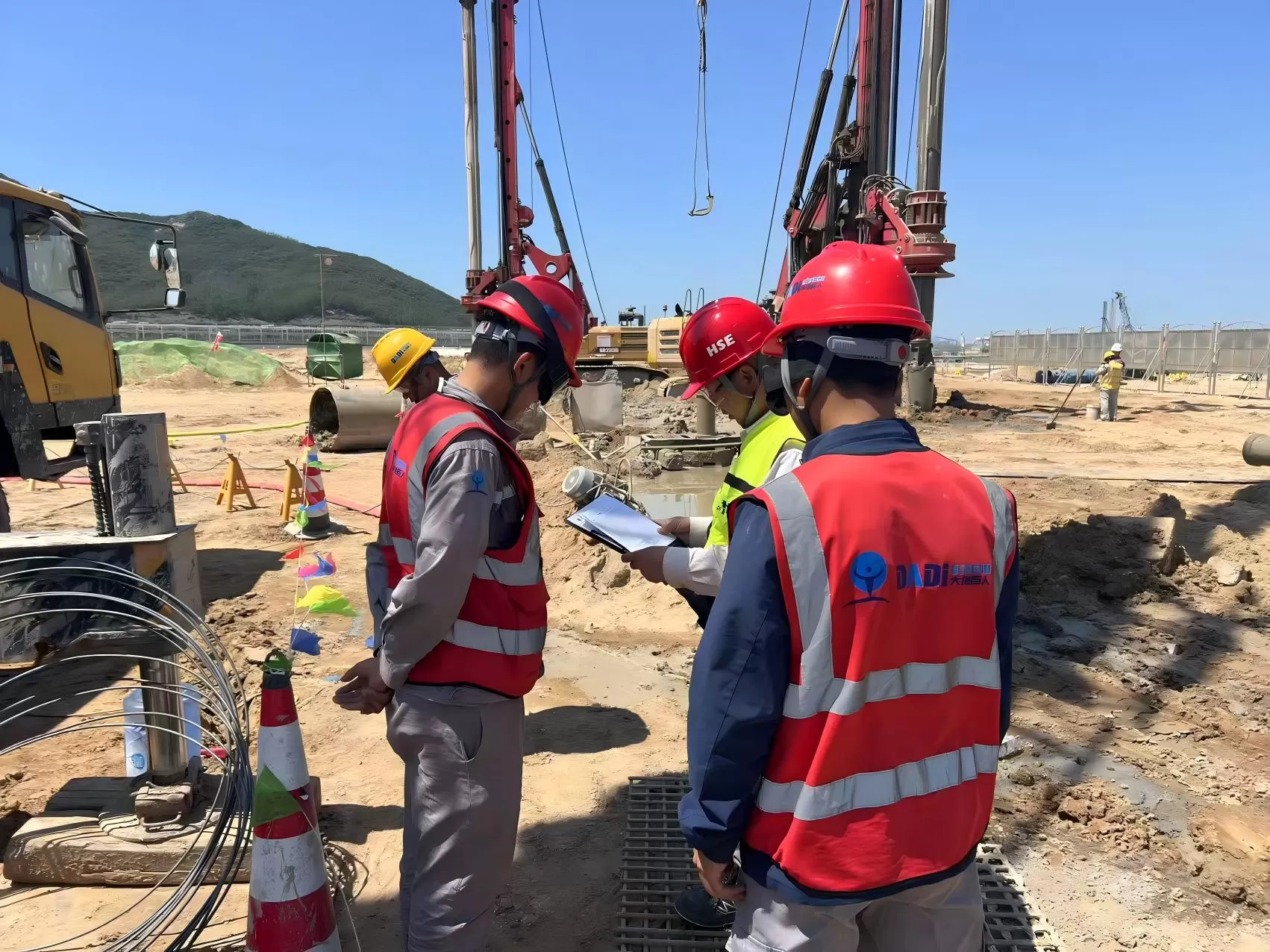
Field trials, quality testing, and construction monitoring—including monitoring of pile displacement during dynamic compaction—are used to verify performance and manage construction interaction between the different treatment elements.
 Application on a 20 m+ Deep Fill Site
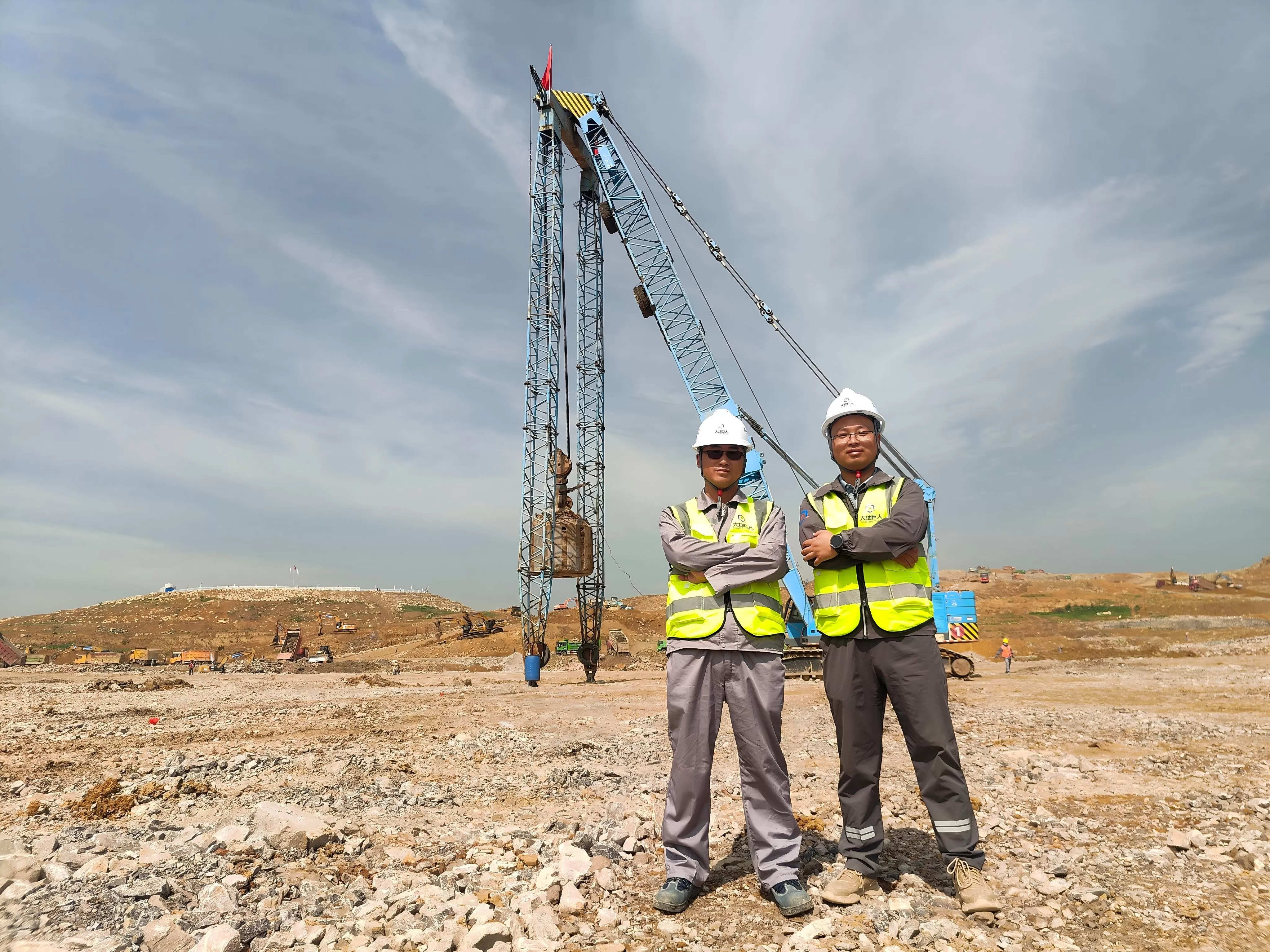
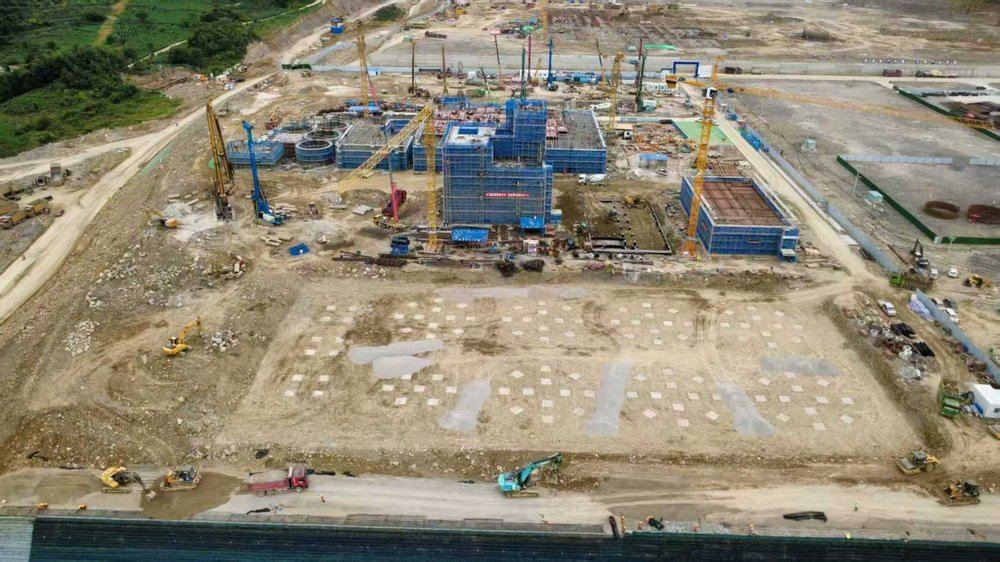
The method has been applied on a new-energy industrial park project in a mountainous area of Southwest China, where the maximum fill thickness exceeded 20 m.
To evaluate treatment performance under the deep fill conditions, the project carried out dynamic compaction and dynamic replacement trials using energy levels of approximately 18,000–25,000 kN·m.
Field results indicated an effective dynamic replacement depth of approximately 18–20 m.
Based on the project scheme comparison, application of the Pile-Pier Composite Ground Improvement Method, compared with the original pile foundation scheme, was estimated to achieve:
approximately 60% lower cost and approximately 50% shorter construction duration
For deep fill sites exceeding 20 m, the system allows different treatment measures to be assigned according to actual requirements at different depths and foundation locations.
This helps satisfy bearing capacity and settlement-control requirements while reducing unnecessary deep treatment and pile quantities, improving both construction efficiency and overall project economics.
 From a Single Technique to Integrated Design
Ground improvement for deep fill sites requires a coordinated assessment of fill thickness, subsurface conditions, structural loading, settlement criteria, and construction constraints.
The core of the Ground Strider concept is therefore not any individual construction technique. It is the integrated design of dynamic compaction, replacement piers, and settlement-reducing piles, with the treatment configuration tailored to the actual ground and structural conditions.
Performance is then verified through field trials, testing, and construction monitoring.
The name Ground Strider may be simple and visual, but the engineering behind it is based on a systematic balance between bearing capacity, settlement control, treatment depth, constructability, and project economics.
From deep fill ground to complex site-formation projects, QUAMBO continues to explore practical ways to achieve a better balance between technical reliability and engineering economy.
Creating Site Value Through Geotechnical Engineering
Related ProjectThe same engineering concept has also been applied on a large reclaimed-ground project for the CNOOC and Shell Petrochemicals Phase III development in Huizhou, China. Innovative Design and Construction of the “Ground Strider” System for Reclaimed Ground with a Stiff Upper Layer and Soft Underlying Soils